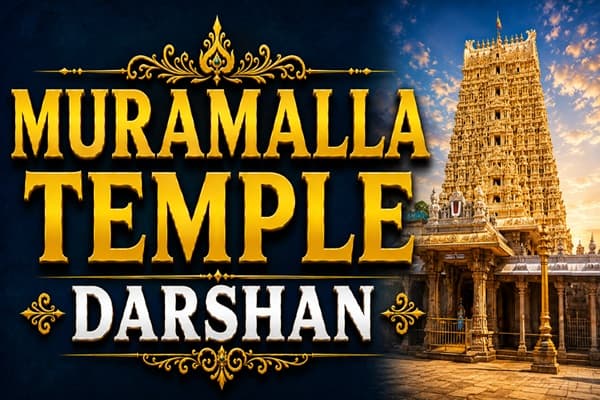
The Gauthami River, a gentle branch of the mighty Godavari, flows past the village of Muramalla in Andhra Pradesh’s Konaseema district. On its banks stands a temple where a divine wedding happens every single evening. Not once a year. Not once a month. Every day. Sri Veereswara Swamy Temple, also known as Muramalla Temple, performs the Nitya Kalyanam, the eternal marriage of Lord Veereswara Swamy, a form of Lord Shiva, and Goddess Bhadrakali. This daily ritual draws thousands of devotees who believe that witnessing this sacred union brings blessings for their own marriages, family harmony, and prosperity.
The temple sits in I. Polavaram Mandal, about 25 kilometers from Amalapuram and 38 kilometers from Kakinada. The drive takes you through lush green fields and coconut groves. The air smells of river water and fresh crops. By the time you reach the temple, you feel like you have stepped into a different world. Slower. Calmer. Holier.
Daily Darshan Timings You Must Know
The temple opens at 5:30 AM. Morning darshan runs from 5:30 AM to 12:30 PM. This is the best window for a peaceful visit. The morning crowd is thinner. The deities look fresh after their night rest. The air by the river is cool and clean.
The temple closes for an afternoon break from 12:30 PM to 4:00 PM. Do not arrive during these hours. The gates will be locked. The priests will be resting. Use this time to eat lunch at one of the small eateries outside the temple or sit by the river.
Evening darshan runs from 4:00 PM to 7:00 PM. On Mondays, the temple stays open until 8:00 PM. The evening crowd is larger because working people visit after their daily chores. The energy is different in the evening. More focused. More intense.
General darshan is completely free. You can walk in during open hours and join the queue. On normal weekdays, the wait is fifteen to thirty minutes. On weekends and festival days, the wait stretches to one or two hours.
For devotees who want a faster experience, Special Darshan is available for 20 rupees. This ticket gives you access to a separate queue that moves faster. The special darshan window runs from 7:00 AM to 10:30 AM. This is a good option for families with young children or elderly members.
The Nitya Kalyanam That Happens Every Evening
The main attraction of Muramalla Temple is the Nitya Kalyanam, performed daily at 7:00 PM. This is not a symbolic ritual. The priests actually conduct a full wedding ceremony. The deities are dressed as bride and groom. Traditional music plays. Priests chant wedding mantras. Flowers are showered. The entire temple feels like a marriage hall.
The ritual costs 1000 rupees per booking. One person is allowed per booking. Advance online booking is mandatory. Slots fill up quickly, especially on weekends and during festival seasons. You cannot walk in and participate without a booking.
The ceremony lasts about thirty minutes. Devotees sit in the mandapam, the pillared hall, and watch as the priests perform the rituals. The priest chants your name and gotra during the ceremony, personalizing the blessing. At the end, you receive the wedding prasadam, including turmeric, kumkum, and flowers. Many couples who are struggling with marital issues or who are unable to find a suitable match specifically attend this ritual. They believe that Lord Veereswara Swamy and Goddess Bhadrakali will bless them with a happy marriage.
If you are attending the Nitya Kalyanam, reach the temple by 6:30 PM. The priests will guide you through the process. Wear traditional attire. Men should wear dhotis or kurtas. Women should wear sarees or salwar suits. The ceremony is sacred. Your clothing should reflect that.
How to Book Nitya Kalyanam Online Step by Step
Online booking for Nitya Kalyanam is simple. The temple trust has set up a user friendly portal. Follow these steps carefully.
First, open your browser and go to the official website at www.sriveereswaraswamytemple.com. The homepage loads with information about the temple, sevas, and festivals.
Second, click on Login. If you are a new user, click on New Registration. Fill in your full name, mobile number, email address, and create a password. Complete the registration. You will receive an OTP to verify your mobile number.
Third, log in using your credentials. Navigate to the Nitya Kalyanam section under the menu bar. Click on it.
Fourth, select your purpose of booking. The options include seeking marriage blessings, marital harmony, family prosperity, or general blessings. Select your birth star, Nakshatra, from the dropdown menu. This is important because the priests will chant your specific birth star during the ritual.
Fifth, click on Search. The available date slots will appear. Select a date. Weekends and festival dates fill up quickly. Book at least two to three weeks in advance for popular dates.
Sixth, click on Click Here to Register. You will be taken to the Registration for Nitya Kalyanam page. Fill in your Gotra, which is your family lineage. If you do not know your Gotra, enter Unknown. Provide your WhatsApp number, postal address, and residence address.
Seventh, review all entered details carefully. Click on Submit. The payment interface will open. Pay 1000 rupees using UPI, net banking, debit card, or credit card.
Eighth, after successful payment, you will receive a confirmation via SMS and email. Download the confirmation. Keep a screenshot on your phone. Take a physical printout if possible.
On the day of the ritual, report to the temple office by 6:30 PM. Show your confirmation and ID proof. The staff will guide you to the mandapam.
Other Sevas and Poojas You Can Book
Aside from the Nitya Kalyanam, the temple offers several other sevas and rituals. Each has its own purpose and price.
Abhishekam, the sacred bathing of the deity, is performed twice daily. Morning Abhishekam runs from 5:30 AM to 6:30 AM. Evening Abhishekam runs from 5:30 PM to 6:30 PM. The cost is 100 rupees. You can sit close to the sanctum and watch as the priests pour milk, curd, honey, ghee, and sandalwood paste over the idol. The mantras, the smell of the offerings, the sight of the lord being bathed like a living king, it stays with you.
Archana, the personal prayer, costs 116 rupees. The priest chants your name and gotra while offering flowers to the deity. Morning archana runs from 7:00 AM to 10:30 AM. Evening archana runs from 4:00 PM to 5:00 PM.
Marriage ceremonies for devotees are conducted daily starting at 9:00 AM. The cost is 500 rupees. You can have your own wedding or renew your vows in the temple. This is popular among couples who want to start their married life with the blessings of Lord Veereswara Swamy and Goddess Bhadrakali.
Vahana Pooja, the vehicle blessing, costs 50 rupees. The ritual runs from 7:00 AM to 12:30 PM. Bring your vehicle to the designated area. The priest chants mantras, applies vermillion on the vehicle, breaks a coconut, and sprinkles holy water.
Saswatha Pooja is a one time lifetime pooja. It costs 1,116 rupees. Once you pay, the temple priests perform rituals on your behalf on specific days every year. This is for devotees who cannot visit the temple regularly.
Chandi Homam and Veereswara Homam are fire rituals. Each costs 1,116 rupees. These are performed on request. Contact the temple office to book a date. The homams are powerful rituals for removing obstacles and bringing prosperity.
Annadanam donation starts at 200 rupees. You can sponsor a meal for devotees. The temple serves free food to all visitors as part of its annadanam program. Your donation helps keep this program running.
Festivals That Bring the Temple to Life
Brahmotsavam is the grandest festival at Muramalla Temple. In 2026, it is tentatively scheduled from 9 October to 16 October. The nine day event includes chariot processions, special poojas, cultural programs, and homams. The temple is decorated with lights and flowers. Thousands of devotees attend. If you plan to visit during Brahmotsavam, book your accommodation and sevas months in advance.
Kalyanam Festival runs from 13 November to 15 November 2026. During these three days, the Nitya Kalyanam is performed with extra grandeur. More priests participate. More decorations are added. The atmosphere is festive and deeply devotional.
Vaikunta Ekadasi on 20 December 2026 is another important day. Early morning rituals begin before sunrise. The temple opens earlier than usual. Devotees believe that darshan on this day brings moksha, liberation.
How to Reach Muramalla Temple
By road, Muramalla is well connected to nearby towns and cities. From Amalapuram, the temple is 25 kilometers away. Drive time is about forty five minutes. From Kakinada, the distance is 38 kilometers. The drive takes about an hour. From Rajahmundry, the distance is 105 kilometers. Drive time is about two and a half hours.
Local buses, auto rickshaws, and taxis are available from all these towns. If you are driving yourself, the roads are in good condition. The temple has ample free parking for cars and buses.
By train, the nearest railway station is Kakinada Town, about 38 kilometers away. From the station, take a taxi or bus to Muramalla. The drive takes about an hour.
By air, the nearest airport is Rajahmundry Airport, about 100 kilometers away. From the airport, hire a taxi for the two and a half hour drive.
Also Read : Kal Bhairav Temple Varanasi: Timings, Aarti, Liquor Offering & Guide
Where to Stay
The temple does not have its own guest house. But several budget hotels and lodges are available in Amalapuram and Kakinada. Amalapuram is closer, just 25 kilometers away. Most devotees prefer to stay in Amalapuram and drive to the temple for the evening rituals.
Prices range from 500 to 1,500 rupees per night. Rooms are basic but clean. A bed, a fan, an attached bathroom. No luxury. Just honest accommodation for tired pilgrims.
For a more comfortable stay, Kakinada offers mid range and premium hotels. Prices start from 1,500 rupees and go up to 4,000 rupees. Book well in advance during festival seasons.
The Serene Setting by the Gauthami River
The temple’s location on the banks of the Gauthami River is part of its charm. After your darshan, walk down to the river. The water is calm. The breeze is gentle. The sunsets are stunning.
Many devotees sit on the riverbank and meditate before entering the temple. The sound of the water, the rustle of the coconut palms, the distant temple bells, it all combines into a natural meditation.
If you have time, take a boat ride on the river. Local fishermen offer short rides for a small fee. The view of the temple from the water is beautiful. The spire rises above the trees, and the setting sun reflects off the river.
The Blessing of the Daily Wedding
There is something deeply moving about watching a wedding every evening. The same rituals. The same mantras. The same flowers. But each time, the priests perform it as if it is the first time. The devotion does not fade. The energy does not dim.
Stand in the mandapam. Watch the deities being dressed. Listen to the mantras. The sound of the Sanskrit syllables fills the hall. Even if you do not understand the words, you understand the intention. Two divine beings are being united. And you are being invited to witness.
When the priest chants your name, something shifts. You are not just a spectator. You are a participant. The wedding is for the deities. But the blessings are for you. For your marriage. For your family. For your life.
After the ritual, you receive the prasadam. A small packet of turmeric powder and kumkum. A few flowers. The priest applies a tilak on your forehead. You step out of the mandapam. The night has fallen. The river is dark and quiet. The temple lamps glow. And you feel lighter. As if a weight has been lifted. As if the lord and goddess have accepted your prayer and are already working on your blessing.