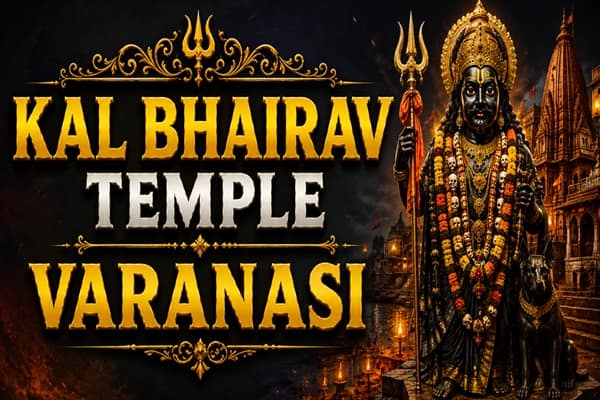
The narrow lanes of Varanasi twist and turn like the city’s own thoughts. In one such lane, near Visheshwarganj, stands a temple that does not whisper. It roars. Kal Bhairav Temple is not for the faint hearted. The deity here does not hold a lotus or a conch. He holds a trident and a drum. His eyes are wide. His neck is garlanded with skulls. He is the Kotwal of Kashi, the chief police officer of the city of light. And according to ancient belief, even Yamaraj, the god of death, cannot enter Varanasi without Kal Bhairav’s permission. That is why every pilgrim who comes to Kashi must visit this temple first. Pay your respects to the guardian. Then proceed to the other shrines.
The temple is dedicated to Lord Kal Bhairav, a fierce form of Lord Shiva. He represents time, which in Sanskrit is kaal. And he represents terror, which is bhairav. Together, he is the terrifying lord of time. The one who eats even death itself. Standing before his idol, which is silver faced and wears a garland of skulls, you feel something shift inside you. Fear dissolves. Courage rises. The problems that seemed huge on the train ride to Varanasi suddenly feel manageable. That is the power of this place.
Daily Darshan Timings You Must Know
The temple follows a schedule that accommodates the heavy flow of devotees. Morning darshan starts at 5:00 AM and continues until 12:00 PM. The temple then closes for an afternoon break from 12:00 PM to 1:30 PM. Do not arrive during these hours. The gates will be locked. The priests will be resting.
Evening darshan runs from 1:30 PM to 9:30 PM. The temple closes for the night around 9:30 PM. On Sundays, Mondays, Ashtami days, and during festivals, the timings may extend. The crowd increases significantly on these days.
The best time for a peaceful darshan is early morning between 6:00 AM and 7:30 AM. The crowd is thin. The air is cool. The deity looks fresh after his morning rituals. If you cannot wake up early, the evening slot after 7:00 PM is also manageable. The aarti at that hour is powerful, and the temple feels alive with energy.
Aarti Schedule That Raises the Hair on Your Arms
The aartis at Kal Bhairav Temple are not gentle affairs. They are loud, intense, and raw. The sound of drums, conch shells, bells, and Vedic chants fills the small temple and spills out into the lane. Devotees sway. Eyes close. Hands rise. The energy is palpable.
Mangala Aarti happens at 5:30 AM. This is the morning awakening ritual. The deity is woken up, bathed, and offered the first prayers of the day. The temple is dark except for the oil lamps. The priests chant in deep voices. This aarti is intimate and peaceful.
Bhog Aarti takes place at 11:30 AM. Food is offered to the deity. The aroma of the offerings fills the temple. This is a shorter aarti, often less crowded than the evening one.
Sandhya Aarti at 6:30 PM is the main event. The temple is packed. The energy is at its peak. The priests perform the ritual with brass lamps, waving them in front of the deity while singing. The flames reflect off the silver face of Kal Bhairav. The effect is hypnotic.
Shayan Aarti happens at 8:30 PM. The deity is prepared for sleep. The lamps are dimmed. The chants become softer. The crowd thins. This aarti is tender, like putting a child to bed.
First time visitors should not miss the Sandhya Aarti. It is the most powerful experience the temple offers. Arrive by 6:00 PM to get a good spot.
The Unique Offering of Liquor
Ask anyone in Varanasi what makes Kal Bhairav Temple different, and they will give you the same answer. The liquor offering. Devotees bring sealed bottles of country liquor, usually a local spirit. The priest takes the bottle, offers it to the deity, and then returns it to the devotee as prasad. The bottle remains sealed. Nothing is poured. Nothing is consumed inside the temple.
This ritual shocks many first time visitors. But it is not about promoting drinking. It is about surrender. In tantric traditions, alcohol represents the poison of ego. Offering it to the deity means offering your pride, your arrogance, your attachments. The bottle comes back to you blessed. You are supposed to take it home and use it as a holy object, not as a beverage.
The ritual is simple. Buy a sealed bottle from one of the shops outside the temple. Hand it to the priest. He will chant a few mantras, wave a lamp over it, and hand it back. You pay a small fee, usually 50 to 100 rupees. The priest then applies a tilak on your forehead and gives you the prasad.
Many devotees report feeling a sense of relief after this offering. As if a weight they did not know they were carrying had been lifted. The ritual works not because of the alcohol, but because of the intention behind it.
Festivals That Fill the Lanes
Kal Bhairav Ashtami, also called Kal Bhairav Jayanti, falls in December, on 24 December 2026. This is the most important festival at the temple. The deity is decorated with new clothes and ornaments. Special poojas are performed throughout the day. The temple stays open late. Thousands of devotees crowd the narrow lanes. If you plan to visit on this day, expect to wait.
Mahashivratri on 17 March 2026 is another major celebration. Devotees stay up all night, singing bhajans and performing rituals. The temple is packed from evening until early morning.
The month of Shravan, July to August, brings a special energy. Mondays in Shravan are considered highly auspicious. Devotees walk from Kashi Vishwanath Temple to Kal Bhairav Temple, carrying water from the Ganges to offer to the deity. The lanes are filled with saffron clad pilgrims.
Ashtami Tithi, the eighth day of every lunar fortnight, is considered sacred to Kal Bhairav. On these days, the temple sees a higher than usual crowd. Special poojas are performed with black sesame seeds, mustard oil, and flowers.
The Guardian of Kashi
The story of Kal Bhairav is rooted in Hindu mythology. Once, Brahma, the creator god, grew arrogant. He believed he was supreme. Lord Shiva created Bhairav from his own being. Bhairav cut off one of Brahma’s five heads. Brahma’s ego was destroyed. But Bhairav was cursed for this act of violence. He had to wander as a beggar, carrying the severed skull as a begging bowl.
When Bhairav reached Varanasi, the skull fell from his hand. His curse was lifted. Shiva declared that Bhairav would be the Kotwal of Kashi, the guardian of the city. From that day, no soul can enter or leave Varanasi without his permission.
This is why devotees believe that visiting Kal Bhairav Temple is essential. He is the gatekeeper. Pay your respects to him first. Then go to Kashi Vishwanath. Then visit the other temples. The order matters.
Many devotees also believe that worshipping Kal Bhairav removes fear of death. He is the lord of time. He controls the moment of departure. If he is pleased, he ensures a peaceful end. This belief draws the elderly to his temple. They light mustard oil lamps, offer black sesame seeds, and pray for a smooth transition.
Also Read : Sri Govindaraja Swamy Temple Tirupati: Darshan Timings, Sevas, Annaprasadam
How to Reach the Temple
Kal Bhairav Temple is located in the Vishweshwarganj area, about 1.5 kilometers from Kashi Vishwanath Temple. The nearest landmark is Godowlia Chowk.
By train, Varanasi Junction is about 3 kilometers away. From the station, take an auto rickshaw. The driver will drop you at the main road. From there, you need to walk through narrow lanes. E rickshaws can go closer, but the final stretch is on foot.
By air, Lal Bahadur Shastri International Airport is about 25 kilometers away. Taxis charge around 500 to 700 rupees. The drive takes forty five minutes to an hour.
By road, if you are driving yourself, park near Godowlia Chowk. The lanes to the temple are too narrow for cars. Walk from there. It takes about ten to fifteen minutes.
Wear comfortable shoes. The lanes are uneven, crowded, and often wet. Do not wear expensive sandals. They will get dirty.
Dress Code and Rules
The temple expects traditional and modest clothing. Men should wear dhoti kurtas or full length trousers with shirts. Shorts and sleeveless shirts are not appropriate.
Women should wear sarees or salwar kameez. Western dresses, sleeveless tops, and short skirts are not permitted.
Remove your footwear before entering the temple premises. A shoe stand is available near the entrance. Keep your shoes together. The lane outside is crowded, and shoes can get misplaced.
Photography is not allowed inside the sanctum. Do not try to take pictures of the deity. The priests will stop you. Other devotees will be offended. Leave your phone in your pocket.
Maintain silence inside the temple. This is not a place for loud conversations. Follow the queue instructions. Do not push or rush. The temple is small. The crowd is large. Patience is required.
The Raw Energy of Kashi
Varanasi is not a gentle city. The ghats smell of incense and sewage. The lanes are clogged with cows, tourists, and pilgrims. The noise never stops. Kal Bhairav Temple fits this energy perfectly. It does not offer peace. It offers power.
Stand in the queue. Watch the priests perform the rituals. Listen to the drums. Smell the mustard oil and incense. When you finally reach the sanctum, look up at the silver faced deity. His eyes are wide. His mouth is slightly open. He looks like he is about to speak.
Offer your prayer. Whisper it. He will hear. Ask for protection. Ask for courage. Ask for the removal of fear. Then step back. Make way for the next devotee. Walk out into the lane. The noise will hit you again. But something will have changed inside you. The fear that brought you here will have lessened. The courage you asked for will have arrived. Kal Bhairav does not give you peace. He gives you the strength to face whatever is disturbing your peace.