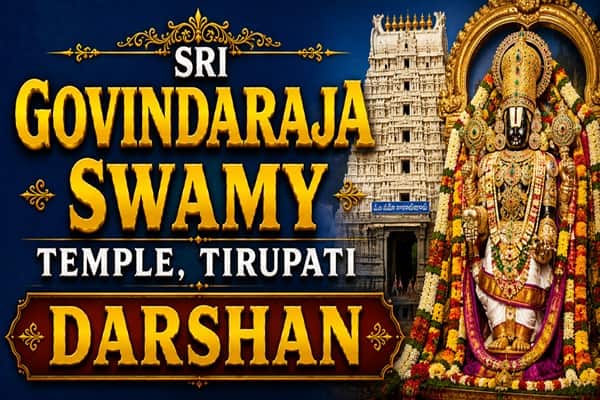
Before you climb the seven hills of Tirumala, there is a stop in the city below that most pilgrims do not skip. The Sri Govindaraja Swamy Temple sits on North Mada Street in the heart of Tirupati. Its towering gopuram, the temple tower, is visible from half the city. And inside that gopuram lies a deity who is believed to be the elder brother of Lord Venkateswara himself. For generations, devotees have followed a simple rule. Visit Govindaraja Swamy first. Then go to Tirumala. The elder brother’s blessings ensure that the younger brother’s darshan is smooth.
The temple was consecrated in 1130 AD by the great Vaishnavite saint Sri Ramanujacharya. He chose this location, designed the rituals, and established the worship traditions that continue to this day. Built in the classic Dravidian style, the temple is one of the largest in Tirupati. The main deity, Lord Govindaraja Swamy, is worshipped in a reclining posture on the serpent Adisesha. This is the same posture as Lord Ranganatha in Srirangam. The connection is not accidental. Ramanujacharya brought the traditions of Srirangam to Tirupati.
Daily Darshan Timings You Must Know
The temple opens at 5:00 AM sharp. The first ritual is Suprabhatha Seva, running from 5:00 AM to 5:30 AM. This is the wake up call for the deity. The priests chant the Suprabhatam, the same hymn that wakes Lord Venkateswara on the hills. The atmosphere is calm, dark, and deeply spiritual. Only a limited number of devotees are allowed during this seva. If you want to experience the temple at its most intimate, book this slot.
Viswaroopa Darshanam follows from 5:30 AM to 6:30 AM. This early morning darshan window is the best time for a peaceful, uncrowded visit. The temple is still quiet. The crowd has not yet arrived. The deity looks fresh after his morning rituals.
Thomala Seva runs from 6:30 AM to 7:30 AM. The deity is decorated with flower garlands. The sanctum fills with the scent of jasmine and marigold. This is a beautiful seva to witness, even if you are not participating.
Sahasranamarchana happens from 7:30 AM to 8:00 AM. The priests chant the one thousand names of Lord Vishnu. The sound of the Sanskrit syllables fills the hall. Even if you do not understand the words, the rhythm is meditative.
Archananantara Darshanam runs from 8:00 AM to 8:45 AM. This is a short darshan window after the archana ritual.
Then the morning break begins. From 8:45 AM to 9:30 AM, the temple pauses for Naivedyam, the food offering. Darshan is closed during this time. Do not arrive at 9:00 AM expecting entry.
Sarva Darshan, the free darshan for all devotees, runs in three sessions. Morning session from 9:45 AM to 12:30 PM. Afternoon session from 1:30 PM to 4:45 PM. Evening session from 6:00 PM to 8:30 PM.
The temple takes two more breaks for Naivedyam. One from 12:30 PM to 1:15 PM. Another from 5:00 PM to 6:00 PM.
The final ritual of the day is Ekanta Seva, from 9:00 PM to 9:30 PM. The deity is prepared for sleep. The temple closes shortly after.
Seva Tickets That Cost Almost Nothing
The TTD has kept seva ticket prices at Sri Govindaraja Swamy Temple incredibly low. This is intentional. Every devotee, regardless of income, should be able to participate in the sacred rituals.
Suprabhatam costs 10 rupees. Thomala Seva costs 10 rupees. Sahasranamarchana costs 10 rupees. Archananantara Darshanam costs 10 rupees. Ekanta Seva costs 10 rupees.
For devotees who want a faster darshan, Special Entrance Darshan costs only 5 rupees. Quick Darshan, which offers the fastest entry, costs 20 rupees.
These tickets can be booked online through the official TTD portal. Booking is recommended, especially during weekends and festival seasons. The queues at the ticket counter can be long. A few clicks online save you hours of standing.
The Annaprasadam That Feeds Thousands
Every day, thousands of devotees eat a free meal at the Govindaraja Swamy Temple. This is not a small operation. The temple kitchen prepares meals in bulk, following strict hygiene standards. The food is simple but nourishing. Rice, sambar, rasam, vegetable curry, curd, and a sweet.
Lunch is served from 11:30 AM to 2:30 PM. Dinner is served from 7:30 PM to 9:30 PM.
The Annaprasadam hall is located within the temple complex. Join the line. Take a leaf. Sit on the floor. Eat with your hands. This is how food has been served in South Indian temples for centuries.
Many devotees consider eating Annaprasadam here as important as the darshan itself. The meal is not just food. It is prasad. The lord’s blessing, served on a banana leaf.
Donating the Annaprasadam
Devotees who wish to sponsor this free meal can do so through the TTD. The donation amounts are substantial, but the act is considered highly meritorious.
Sponsoring breakfast for one day costs 10,00,000 rupees. Lunch sponsorship costs 17,00,000 rupees. Dinner sponsorship costs 17,00,000 rupees. A full day donation, covering all three meals, costs 44,00,000 rupees.
The donor’s name is recorded in temple records, and official acknowledgment is provided by the TTD. This is not a small donation. But for business families and charitable trusts, sponsoring Annaprasadam is a way to give back to the community that has given them so much.
Why Devotees Visit This Temple Before Tirumala
The belief is deeply rooted in the relationship between the two deities. Lord Govindaraja Swamy is considered the elder brother of Lord Venkateswara. The elder brother’s blessings must be sought before approaching the younger brother.
There is a practical aspect to this tradition as well. Tirumala darshan can be unpredictable. Sometimes the queue moves fast. Sometimes you wait for hours. By praying at Govindaraja Swamy Temple first, devotees feel that the path to Tirumala is cleared. Obstacles are removed. The mind becomes calm.
Many devotees also perform specific sevas at this temple before climbing the hills. Suprabhatam is popular. Thomala Seva is another favorite. The belief is that the elder brother will put in a good word with the younger brother.
Major Festivals at the Temple
Brahmotsavam is the grandest festival of the year. The temple celebrates this nine day event with processions, special poojas, and cultural performances. The deities are taken out on different vahanas, vehicles, each day. The streets around the temple fill with devotees.
Vaikuntha Ekadasi is another major festival. On this day, the Vaikunta Dwaram, the gate to the lord’s heavenly abode, is opened. Devotees queue from the early hours to pass through this gate. The belief is that those who pass through will attain moksha.
Sri Andal Neerattu Utsavam is celebrated in the Tamil month of Adi, July to August. Andal, the poet saint who merged with Lord Ranganatha, is worshipped with special rituals.
Rama Navami and Krishna Janmashtami are celebrated with enthusiasm. The temple organizes bhajans, discourses, and special poojas on these days.
During all festivals, darshan timings may be extended. The crowd increases significantly. If you plan to visit during a festival, book your sevas well in advance.
How to Reach the Temple
The temple is located on North Mada Street, Tirupati, Andhra Pradesh 517504. The location is central. You cannot miss it.
By train, Tirupati Railway Station is within walking distance. Many devotees simply walk from the station to the temple. The distance is less than one kilometer.
By road, APSRTC buses and local autos frequently stop near the temple. If you are coming from the Tirupati bus stand, ask for Govindaraja Swamy Temple. Every driver knows it.
By air, Tirupati Airport is about 15 kilometers away. Taxis from the airport charge around 400 to 600 rupees. The drive takes thirty minutes.
Also Read : Surkanda Devi Temple Uttarakhand: Timings, Ropeway Ticket Price, Festivals 2026
Dress Code and Temple Etiquette
The temple expects traditional and modest clothing. Men should wear dhotis, kurtas, or formal trousers with shirts. Shorts and sleeveless shirts are not allowed.
Women should wear sarees or salwar kameez. Western dresses, sleeveless tops, and short skirts are not permitted.
Mobile phones, cameras, and electronic devices are not allowed inside the sanctum. Deposit them in the lockers near the entrance. Do not try to sneak your phone in. The security staff checks.
Maintain silence inside the temple. This is not a place for loud conversations. Follow the queue instructions. Do not push or rush. The temple staff manages the crowd with discipline. Cooperate with them.
Architectural Beauty You Should Notice
The temple is a fine example of Dravidian architecture. The main gopuram, the tower at the entrance, is covered with intricate carvings. Scenes from the Ramayana and the Mahabharata are depicted in stone.
The mandapam, the pillared hall, is spacious. The pillars are carved with yalis, mythical lion like creatures. The ceiling is painted with scenes from Krishna’s life.
The sanctum houses the reclining idol of Lord Govindaraja Swamy. The idol is large, peaceful, and covered with ornaments. Goddess Andal has her own shrine within the complex. There are also shrines for Rama, Krishna, and other Vaishnavite deities.
Take a moment to walk around the temple complex. Notice the details. The stone work is hundreds of years old, but the devotion that carved it still feels present.
The Elder Brother’s Blessing
Stand in the queue. Watch the priests perform the rituals. Listen to the chants. And when you finally reach the sanctum, look up at the reclining lord. His eyes are half closed, peaceful, as if he has been lying there for centuries and will lie there for centuries more.
Offer your prayer. Not a long one. A simple one. A request for a smooth journey up the hills. A request for the younger brother’s darshan to be peaceful. A request for protection for your family.
Then leave. Walk out of the temple, through the gopuram, onto the busy streets of Tirupati. Find your cab or your bus. Begin the climb. The elder brother has blessed you. The path is clear.