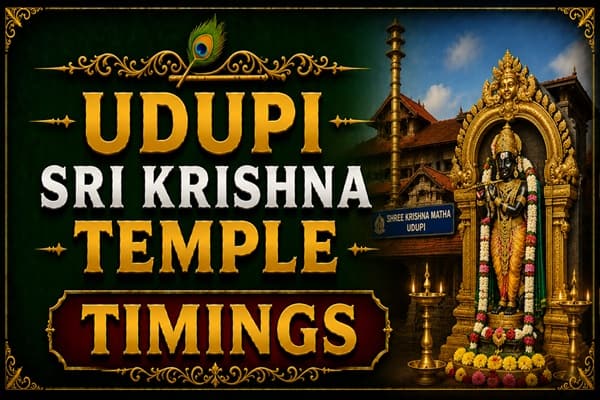
A young boy peeks through a small window with nine holes. He sees Lord Krishna not as a faraway king, but as a playful child holding a churning rod. This is not a scene from ancient history. This happens every single day at the Udupi Sri Krishna Temple. Thousands of devotees line up before dawn just to glance at the deity through the famous Navagraha Kindi. That single moment of eye contact with the lord changes something inside them. Peace settles in. Worries fade. Faith feels real again.
Udupi sits on the western coast of Karnataka, surrounded by coconut trees and gentle sea breezes. The Sri Krishna Temple stands at the heart of this town, pulling pilgrims from every corner of India and beyond. Unlike grand temple complexes that overwhelm you with size, Udupi charms you with simplicity. The rituals feel ancient because they are ancient. The food tastes divine because it was perfected over centuries. And the lord himself appears not as a distant deity, but as a little boy you want to protect.
The Extraordinary History Behind the Temple
Saint Madhvacharya founded this temple in the 13th century. But the real story begins on a ship. According to legend, a vessel carrying a precious idol of Lord Krishna faced a violent storm. The sailors threw the cargo overboard to save themselves. The idol sank into the sea, disappearing beneath the waves. Years later, Madhvacharya saw a vision. He knew exactly where the idol rested.
The saint dove into the ocean and brought back a beautiful statue of Krishna holding a churning rod. Not a single mark of damage. Not a trace of rust or decay. The idol looked as fresh as the day it was carved. Madhvacharya installed this idol in Udupi, and the temple grew around it over the following centuries.
The Dvaita philosophy that Madhvacharya taught changed how people understood their relationship with God. He explained that the individual soul and the supreme soul are eternally separate. You do not merge into God. You serve God. You love God. This simple yet powerful idea gave ordinary people a clear path to devotion without confusing metaphysics.
The Unique Way You See the Deity
Most temples allow you to walk right up to the main idol. Udupi does things differently. You worship Lord Krishna through the Navagraha Kindi, a small window with nine holes. Each hole represents one of the nine planets. Your view of the lord passes through these planetary filters, symbolizing how divine grace reaches you through cosmic forces.
Kanaka Dasa, a great devotee and poet, could not enter the temple because of caste restrictions. He stood outside, singing prayers and crying for a glimpse of his beloved Krishna. The temple wall cracked open. The deity turned to face the devotee. The hole in the wall remained as the Kanakana Kindi, a permanent reminder that true devotion breaks all barriers.
Today, the morning darshan through this sacred window remains the most sought after experience at Udupi. Devotees wake up before sunrise, bathe, and stand in line just to see the lord throw them the same glance he gave Kanaka Dasa centuries ago.
Complete Temple Timings for 2026
The temple wakes up early. Really early. Doors open at 4:00 AM, when the world is still dark and quiet. Morning darshan continues until 12:00 PM, giving you plenty of time to plan your visit. The temple then closes for a midday break from 12:00 PM to 4:00 PM. Priests use this time for cleaning, preparing offerings, and performing internal rituals that devotees do not witness.
Evening darshan starts at 4:00 PM and goes on until 9:00 PM. The entire schedule runs like a well oiled machine. Hundreds of years of practice make everything flow smoothly, even when thousands of people crowd the premises.
Keep in mind that festival days change these timings. Janmashtami, Madhva Navami, and the Paryaya festival bring extended hours, special processions, and night long celebrations. Always check the official website before traveling during these peak periods.
Aarti Schedule That Will Move You
Mangala Aarti happens at 5:30 AM. This early morning prayer marks the lord waking up. The dark temple slowly brightens with oil lamps. Priests chant in deep, rhythmic voices. Devotees stand in silence, watching the deity appear from the shadows. Something about this particular aarti stays with you. Even weeks later, you can close your eyes and feel yourself standing in that queue.
Mahapuja takes place at 7:30 PM. This evening ritual gathers the largest crowds because working devotees can attend after finishing their daily duties. The energy feels different from the morning calm. Daytime worries melt away as the lamps are lit and the chants fill the hall.
Rathotsava, the chariot procession, rolls out between 7:00 PM and 8:00 PM. The temple deity is brought out onto a beautifully decorated chariot. Devotees pull the chariot through the streets, singing and dancing. This public celebration connects the temple to the entire town. Everyone becomes part of the worship.
Ekanta Seva closes the temple from 8:30 PM to 9:00 PM. This final ritual puts the lord to sleep. The atmosphere becomes tender and intimate. Soft chants. Dim lights. The feeling of tucking a child into bed. Many regular visitors consider this their favorite moment of the day.
Sevas You Can Book for a Deeper Experience
Tulabharam remains the most visually striking seva. You sit on one side of a traditional weighing scale. The priest places items like sugar, fruits, or flowers on the other side until the scale balances. Your offering equals your body weight. This symbolic gesture represents surrendering your ego and attachments to the lord.
Panchamrita Abhisheka costs around 500 rupees. The priests bathe the idol with five sacred nectars: milk, curd, ghee, honey, and sugar. Watching this ritual feels like witnessing a secret ceremony. The priests handle the idol with such care and devotion that you cannot help but feel emotional.
Annadana Seva costs 1000 rupees. Your donation feeds hungry devotees who come from far away. Udupi cuisine originated in this temple kitchen. The simple, flavorful meals served here taste like nothing else. Participating in Annadana brings blessings not just to the recipient, but to the donor as well.
For a smaller budget, Archana costs only 100 rupees. The priest chants your name and gotra while offering flowers to the deity. This personalized prayer makes you feel seen and heard. Mahapuja costs 250 rupees and includes special offerings during the evening ceremony.
Laksha Deepotsava costs 1500 rupees. During this grand festival, devotees light one hundred thousand lamps around the temple. The sight of countless flickering flames reflecting off the temple walls creates an unforgettable visual.
How to Book Sevas Online from Anywhere
Not everyone can travel to Udupi. Sick devotees, elderly grandparents, and busy professionals living abroad still want to participate. The temple recognized this need and created a robust online booking system.
Visit the official website at udupikrishnamutt.com. Browse through the available sevas. Each listing explains exactly what the ritual involves and when the priests will perform it. Select your preferred date. Complete the payment using a credit card, debit card, or net banking. The confirmation arrives instantly in your email.
The priests perform the seva exactly as if you were standing there. They chant your name during Archana. They offer Tulabharam on your behalf. They distribute Annadana using your donation. You receive a confirmation message or photo as proof. This system brings the temple to your home, no matter where in the world you live.
Free Meals and Prasadam Timings
The temple feeds everyone without asking for money. Lunch runs from 12:00 PM to 2:00 PM. Dinner runs from 7:00 PM to 9:00 PM. The meals follow traditional Udupi recipes that have been perfected over centuries. Rice, sambar, rasam, vegetable curry, curd, and payasam. Simple ingredients prepared with devotion.
Do not miss the Thulasi Theertham, the free sacred basil water offered throughout the day. A single sip feels cooling and purifying. Many devotees consider this water more precious than any expensive offering.
The temple kitchen operates on a massive scale. Hundreds of volunteers wash vegetables, stir pots, and serve meals. Watching this operation gives you a new appreciation for the phrase feeding the hungry is feeding God.
Dress Code Rules You Must Follow
The temple takes dress code seriously. This is not a suggestion. This is a requirement for entry. Men must wear dhotis or pants. Shorts are strictly prohibited. Upper clothing is optional, but most visitors wear simple shirts or kurtas.
Women must wear sarees, salwar suits, or long skirts that cover the knees. Sleeveless tops and short clothing will get you stopped at the entrance. The temple does not provide loaner clothes or wraps. Come dressed appropriately or face disappointment.
These rules are not about judging your fashion choices. The temple maintains a certain atmosphere. Traditional clothing signals that you are entering a sacred space, not a tourist attraction. When everyone follows the dress code, the entire environment feels more respectful and focused.
Where to Stay Near the Temple
The temple guest rooms offer the most convenient option. Located within walking distance, these basic rooms cost between 300 to 800 rupees per night. Do not expect luxury. The beds are simple. The bathrooms are clean but basic. The real value comes from rolling out of bed and walking straight to the morning aarti.
Nearby mathas and lodges provide similar budget accommodations. Prices vary by season and demand. Walking around Car Street reveals multiple options. Some look better than others. Always ask to see the room before paying.
Private hotels start at 1500 rupees per night and go up from there. These offer air conditioning, attached bathrooms, room service, and other modern comforts. Families with young children or elderly members often prefer this option. The extra cost buys peace of mind.
Book everything in advance during festival seasons. Janmashtami fills every room within a fifty kilometer radius. Same day bookings become nearly impossible. Plan your trip well ahead of time.
How to Reach Udupi Step by Step
Mangalore International Airport sits 60 kilometers from Udupi. Flights connect Mangalore to Mumbai, Bangalore, Chennai, Delhi, and major Gulf cities. From the airport, pre paid taxis cost around 2000 rupees. KSRTC buses run frequently and cost much less. The bus drops you right in Udupi town, a short walk or auto ride from the temple.
Udupi Railway Station lies just 4 kilometers from the temple. Express trains from Bangalore, Mumbai, Chennai, and Delhi stop here. Many devotees prefer night trains. Sleep on the train, wake up in Udupi, and head straight to the temple. Autos wait outside the station. The fare should not exceed 100 rupees.
KSRTC buses connect Udupi to Bangalore, Hyderabad, Mysore, and Mangalore. The bus station sits close to the temple. Walking takes ten minutes. Autos are available for those with luggage. The roads are well maintained, and the journey offers lovely coastal views.
Also Read : Bet Dwarka Temple Timings, Boat Services, Darshan Guide & History
Nearby Temples and Attractions Worth Visiting
Anantheshwara Temple stands right next to the Sri Krishna Temple. This ancient Shiva temple predates the Krishna temple by centuries. The architecture looks completely different. Dark stone, smaller spaces, and a deep sense of age. Walk over after your Krishna darshan. The contrast will surprise you.
Chandramouleshwara Temple lies a short distance away. Another Shiva temple with historical significance. Less crowded than the main temple. Perfect for quiet meditation away from the rush.
Malpe Beach sits 6 kilometers from Udupi. Golden sand, gentle waves, and food stalls selling fresh seafood. A good place to relax after your temple visit. St Mary’s Island, known for its unique columnar rock formations, requires a short boat ride from Malpe. The combination of spiritual and natural beauty makes Udupi a complete destination.
The Paryaya System That Makes Udupi Special
Most temples have one management committee. Udupi has eight. The Ashta Mathas, eight monasteries established by Madhvacharya, take turns managing the temple. Each matha gets two years of control. This rotation system is called Paryaya.
When a new matha takes over, the entire town celebrates. A grand procession carries the new leaders to the temple. Special rituals mark the transition. Thousands of devotees gather to witness this changing of the guard. The next Paryaya festival happens in January of even numbered years. Plan your visit around this time for a truly unique experience.
Each matha brings its own style to the rituals. The deity gets dressed differently. The food recipes change slightly. The priests chant in slightly different rhythms. Regular visitors can tell which matha is in charge just by watching the morning aarti.
Practical Tips for a Smooth Visit
Arrive before 5:00 AM for Mangala Aarti. The crowd builds quickly after 5:15 AM. Being early means you stand closer to the window and see the deity more clearly.
Carry minimal belongings. Bags need to be checked outside. Mobile phones are not allowed inside the main shrine. A small waist pouch with cash, your phone, and your temple ticket works best.
Wear shoes that slip on and off easily. You will remove them before entering. The shoe stand gets crowded. Keeping your footwear in your own bag saves time and prevents mix ups.
Stay hydrated. Udupi gets humid, especially during summer. Water is available near the temple, but carrying your own bottle is easier.
Ask the priests if you have questions. They look busy and intimidating, but most are happy to explain rituals to sincere devotees. A respectful namaste followed by a simple question usually gets a kind response.
Why This Temple Changes People
There is something about Udupi Sri Krishna Temple that words cannot fully capture. Maybe it is the early morning darkness giving way to oil lamp light. Maybe it is the taste of prasadam that your tongue remembers for years. Maybe it is the nine holed window that forces you to look closely, to pay attention, to truly see.
Devotees leave this temple different from how they arrived. Not because of a dramatic miracle or a sudden vision. The change happens slowly, quietly, as you stand in line with strangers who feel like family. The lord peeks through the window. You catch his eye. And for one perfect moment, nothing else matters.