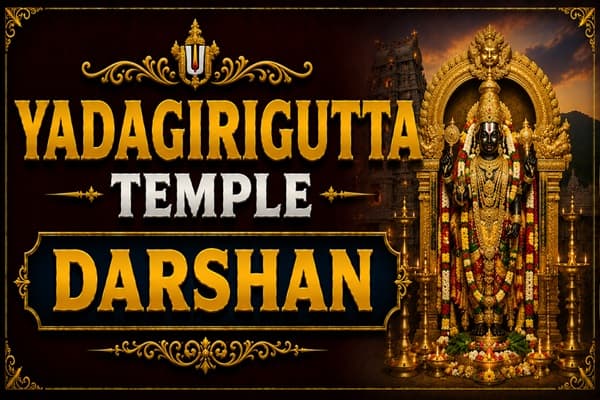
A hill rises from the flatlands of Telangana, and on top of that hill sits a temple that devotees call the Tirupati of Telangana. Yadagirigutta, also known as Yadadri, is not just another temple. It is the home of Lord Narasimha, the fierce half man half lion incarnation of Lord Vishnu. Unlike stone idols carved by human hands, the deity here is self manifested. The lord chose this hill. He appeared here naturally, inside a cave, without any sculptor. That alone makes this place different.
The temple has many names. Pancha Narasimha Kshetram. Rishi Aradhana Kshetram. Yadagiri Gutta Devasthanam. But the locals simply call it Yadadri. For over a thousand years, devotees have climbed these steps, walked through these corridors, and stood before the lord with folded hands. The recent 1800 crore renovation has transformed the complex into a architectural marvel, but the energy inside the sanctum remains unchanged. The lord still sits there, eyes wide, ready to protect anyone who calls his name.
Daily Darshan Timings That Start Before Sunrise
The temple wakes up while the rest of the world still sleeps. Doors open at 3:30 AM. Not 5:00. Not 6:00. Three thirty in the morning, when the air is cool and the hill is quiet. Suprabhatam, the ritual that wakes the lord, happens from 3:30 AM to 4:00 AM. Only a limited number of devotees are allowed inside during this time. The experience is intimate. The priests chant in voices that have not changed in centuries. The lamps flicker against the dark marble walls.
Thiruvaradhana follows from 4:00 AM to 4:30 AM. Bala Bogam, the morning food offering, runs from 4:30 AM to 5:15 AM. Then comes Nijabhishekam, the sacred bath of the deity, from 5:15 AM to 6:15 AM. This is one of the most sought after rituals. The priests pour milk, curd, honey, ghee, sandalwood paste, and holy water over the idol while chanting Vedic mantras. Watching this ritual is hypnotic. The sound of the chants, the smell of the offerings, the sight of the lord being bathed like a living king. It stays with you.
Archana runs from 6:15 AM to 7:00 AM. General darshan for all devotees starts at 7:00 AM and continues until 9:00 AM. This is the best window for a peaceful, uncrowded darshan. The morning rush has not yet begun. The temperature is still pleasant. The lord looks fresh after his morning bath.
Then comes the first closure. From 3:00 PM to 4:00 PM, the temple closes completely for Dwarabandanamu. Do not arrive at 3:15 PM expecting entry. You will stand outside locked gates. Use this hour to rest, eat, or walk around the complex.
Evening darshan starts at 5:00 PM and continues until 7:00 PM. The evening crowd is larger because working people who cannot visit during the day fill the temple at this hour. Darbar Seva, the royal evening service, happens from 6:45 PM to 7:00 PM. This is a unique ritual where the lord is presented as a king receiving his court.
Final darshan for all devotees runs from 8:15 PM to 9:00 PM. The temple closes at 9:45 PM after the Aragimpu ritual. Night visits are calmer. The crowd is thinner. The lights are dim. Standing before the lord at this hour feels like a private audience.
Darshan Types and Ticket Prices You Should Know
General darshan at Yadagirigutta Temple is completely free. No ticket required. No online booking needed. Simply walk in during the open darshan windows and join the queue. On normal weekdays, the wait ranges from thirty minutes to one hour. On weekends and festival days, the wait stretches to two or three hours.
Special Entry Darshan costs 150 rupees per person. This paid queue moves faster. On most days, your wait drops to twenty to thirty minutes. This is a good middle ground for families who want to save time without spending too much money.
VIP Break Darshan costs 300 rupees per person and offers priority entry with minimal waiting. Only about two hundred tickets are issued per session, so the experience feels exclusive. VIP devotees enter through the North Rajagopuram, separate from the general crowd. This option is particularly suitable for elderly devotees, families with young children, and pilgrims with limited time.
Morning VIP slots run from 9:00 AM to 10:00 AM. Evening VIP slots run from 4:00 PM to 5:00 PM. Book these tickets online in advance, especially during weekends and festival seasons. Same day VIP tickets are rarely available at the counter.
Nijabhishekam: The Most Popular Seva
Nijabhishekam is the ritual bath of the deity. This is not a symbolic bath. The priests actually pour sacred liquids over the idol while you watch from close proximity. The ritual lasts about forty five minutes. Single person ticket costs 400 rupees. Couple ticket costs 800 rupees.
The priests chant the Vedas while offering milk, curd, ghee, honey, panchamrutam, sandalwood paste, and holy water. The idol of Lord Narasimha, with his wide eyes and fierce posture, gets drenched in these offerings. By the end, the lord looks like a newborn, fresh and radiant.
Devotees believe that participating in Nijabhishekam removes negative energies, brings prosperity, and protects from enemies. Couples often book this seva for marital harmony. Single devotees seek blessings for career growth and health. Book this seva online at least two to three days in advance. Same day slots are rarely available.
Nitya Kalyanotsavam: The Daily Divine Wedding
Every day, Lord Narasimha marries Goddess Lakshmi. This is not a metaphor. The priests actually perform a ceremonial wedding ritual daily from 9:45 AM to 11:30 AM. The deities are dressed as bride and groom. Traditional music plays. Priests chant wedding mantras. Flowers are showered. The entire temple feels like a marriage hall.
Nitya Kalyanotsavam costs 1500 rupees per booking. The ritual is two hours long. Devotees seeking marriage blessings prefer this seva. Newly married couples book it for harmony and prosperity. Families also participate for the well being of unmarried children.
Watching the lord and goddess go through the wedding rituals feels strangely emotional. The priests do not rush. They take their time, treating the deities as living beings. By the end, when the couple is declared united, you feel like you attended a real wedding.
Sudarshana Narasimha Homam: The Powerful Fire Ritual
Sudarshana Narasimha Homam is a fire ritual that invokes Lord Sudarshana Chakra, the divine discus of Lord Vishnu, along with Lord Narasimha. The ritual costs 1250 rupees and runs from 7:15 AM to 9:30 AM. The priests make offerings into a sacred fire while chanting powerful mantras.
This homam is believed to protect from evil eyes, remove obstacles in personal and professional life, and bring victory in legal battles. Many devotees report positive life changes after attending this ritual. The smoke, the chants, the fire. The energy in the hall shifts palpably. You do not have to understand the mantras to feel their effect.
Friday Special Seva: Andalamma Unjal Seva
Fridays are dedicated to Goddess Lakshmi, and the temple conducts a special ritual called Andalamma Unjal Seva from 5:00 PM to 6:00 PM. The goddess is placed on a beautifully decorated swing. Priests gently swing her back and forth while singing devotional songs. The ritual costs 1000 rupees.
Women especially prefer this seva for family welfare. Devotees believe it grants wishes and removes difficulties from married life. The prasadam distributed includes special sweets. Friday evenings at Yadagirigutta are crowded. Book this seva at least a week in advance.
How to Book Tickets Online
Online booking has made pilgrimage planning much easier. The official website is managed by the Telangana Endowments Department. Open your browser and go to yadagiriguttatemple.telangana.gov.in. The website is simple. Do not expect fancy graphics. But the booking system works.
Create an account if you are a new user. You will need a valid mobile number and email address. The system sends a one time password to verify your details. Keep your Aadhaar card handy.
Once logged in, click on the Bookings section. Select Darshanam for darshan tickets or Seva Puja for ritual bookings. Choose your preferred date and time slot. Morning slots fill up fastest, especially for Nijabhishekam and Nitya Kalyanotsavam.
Enter the details of every person in your group. Name, age, and Aadhaar number. Double check every entry. If the name on your ID does not match the name on the ticket, you will be denied entry at the temple gates.
Complete the payment using credit card, debit card, net banking, or UPI. Once the payment goes through, you receive an e ticket on your email and mobile phone. Download this ticket. Take a screenshot. Also take a physical printout if possible. Phone networks inside the temple premises can be unreliable.
Tickets are released on a monthly quota system. For popular dates like Fridays, Swathi Nakshatram days, and Ekadashi, tickets sell out within hours of release. Mark your calendar. Log in early. Book as soon as the window opens.
Accommodation Options for Pilgrims
The temple trust manages several guest houses within walking distance of the temple. These are the most convenient options because you can walk to the temple in five to ten minutes. The rooms are clean and affordable.
Lakshmi Sadanam 1 costs 1008 rupees per night. Lakshmi Sadanam 2 costs 560 rupees per night. Andal Sadan 1 costs 700 rupees per night. Andal Sadan 2 costs 1008 rupees per night. All rooms have attached bathrooms, fans, and basic furniture. No luxury. Just honest accommodation for tired pilgrims.
Booking for these guest houses is available online through the same official website. Book well in advance, especially during Brahmotsavam and other festival seasons. Same day rooms are rarely available.
Private hotels near the temple range from budget options at 800 rupees per night to premium hotels at 6000 rupees per night. The area around the temple has many hotels. Read reviews before booking. Some are clean and honest. Others are not.
Vehicle Pooja for Safe Travel
Devotees traveling by personal or commercial vehicles can avail vehicle pooja services at the temple premises. Scooter and motorcycle pooja costs 300 rupees. Auto rickshaw costs 400 rupees. Car pooja costs 600 rupees. Bus, lorry, or tractor pooja costs 1000 rupees.
The ritual takes about fifteen to twenty minutes. The priest chants mantras, applies vermillion on the vehicle, breaks a coconut, and sprinkles holy water. Devotees receive prasadam and holy ash afterwards. This tradition is popular among pilgrims who wish to seek divine protection for safe travel. You can do the pooja on arrival before entering the main temple complex.
Best Time to Visit for a Peaceful Experience
Early morning between 4:00 AM and 8:00 AM is the best time for darshan. The crowd is thin. The temperature is pleasant. The spiritual energy feels fresh. You can complete your darshan and seva before the rush begins.
Weekdays are significantly less crowded than weekends. Monday through Thursday see moderate footfall. Friday is auspicious but crowded. Saturday and Sunday see heavy crowds, especially in the morning and evening.
Avoid visiting on Sundays or major public holidays if you prefer shorter queues. The general darshan queue on a Sunday afternoon can stretch for three to four hours. If you must visit on a weekend, book VIP Break Darshan at 300 rupees per person. The extra cost saves you hours of standing in the sun.
Swathi Nakshatram days, which occur once a month, are considered highly auspicious. Special rituals like Sataghatabhishekam are performed on these days. The temple draws larger crowds. Book your tickets well in advance.
Ekadashi, the eleventh day of the lunar fortnight, is another popular day. Laksha Pushparchana, the grand flower offering ceremony, costs 2500 rupees and happens on every Ekadashi. Thousands of devotees attend.
Also Read : Jagannath Temple Puri Timings 2026: Darshan Schedule, Rituals, Tickets
Dress Code and Temple Etiquette
Traditional Indian attire is mandatory for entry. This is not a suggestion. Men must wear dhotis with shirts or kurtas. Formal trousers are acceptable, but dhoti is preferred. Shorts, jeans, and sleeveless shirts are strictly prohibited.
Women must wear sarees or salwar kameez with dupatta. Long skirts with tops are acceptable if they cover the shoulders and knees. Sleeveless tops, short dresses, and tight jeans will get you turned away at the gate.
Do not argue with the security staff. They are following orders. Changing rooms are not available near the entrance. Dress appropriately before leaving your hotel.
Mobile phones are permitted but must be on silent mode. Photography inside the main sanctum is strictly forbidden. Cameras and video recording devices need special permission. Leather items, including belts and wallets, are prohibited. Large bags and backpacks must be deposited in the cloak room. Free locker facilities are available.
Senior citizens above sixty five years get priority entry. Pregnant women and physically challenged devotees have separate counters. Carry a valid ID proof for availing these facilities.
The Lord Who Protects Without Delay
Devotees call Yadagirigutta the wish fulfilling hill. Not because of magic. Because of faith that has been concentrated here for over a thousand years. Layer after layer of devotion has soaked into the stone floors, the marble walls, the very air that you breathe when you enter.
People come with specific requests. A job promotion. A child’s recovery from illness. A legal battle ending in their favor. They offer coconuts, flowers, and prayers. Then they wait. And more often than not, they return with tears in their eyes, holding the proof of their answered prayers.
The lord sits in the sanctum with his eyes wide open. He does not blink. He does not look away. He stares straight at you, daring you to bring your problems to him. And when you do, he does not hesitate. He acts. That is why millions climb this hill every year. Not for philosophy. Not for tradition. For results.
The 365 steps leading up to the temple are not just stairs. They are a metaphor. Each step takes you closer to the one who removes obstacles. By the time you reach the top, your problems feel smaller. Your faith feels larger. And when you finally stand before Lord Narasimha, with his wide eyes and folded hands, you realize something. You were never alone. He was always watching.