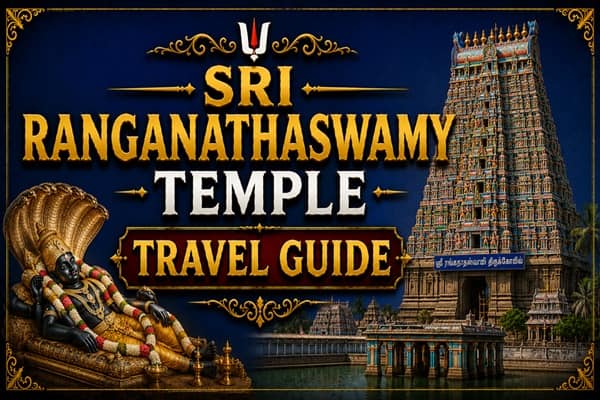
The Rajagopuram appears first. A massive tower rising 239 feet above the flat landscape. Then another tower. And another. Twenty one in total, each one taller and more intricate than the last. This is Sri Ranganathaswamy Temple in Srirangam, the largest functioning Hindu temple complex in the world. Spread over 155 acres, it is not a temple with a town around it. The town grew inside the temple. Seven concentric walls, each representing a layer of consciousness, enclose the sanctum. Walking through them feels like moving toward the center of the universe.
Lord Ranganathar rests here. A reclining form of Lord Vishnu, lying on the serpent Adishesha. The idol faces south, a rare orientation. Crafted from Katusarkara Yogam, a special composition of herbs, sandal, jaggery, honey, camphor, and other sacred materials. Devotees believe this is Bhuloka Vaikuntam, heaven on earth. The first among the 108 Divya Desams, the sacred abodes of Lord Vishnu glorified by the Alvar saints.
This guide covers everything you need. Darshan timings, ticket prices, sevas, aarti schedules, dress code, how to reach, accommodation, and nearby attractions.
The Temple That Is Also a City
Srirangam is a river island. The Kaveri River splits into two, forming the Kollidam distributary, and the town sits on the land between them. This unique geography has made Srirangam one of the oldest inhabited regions in India. The temple dominates the entire island. Seven prakarams, or walled enclosures, create concentric rings around the sanctum. Each prakaram has its own gopuram, its own shrines, its own life.
The temple’s origins trace back to the early medieval period. The Chola, Pandya, Hoysala, and Vijayanagara dynasties all contributed to its growth. Each ruler added something new. A corridor here. A mandapam there. A tower to mark their devotion. The great philosopher Ramanujacharya lived here for many years, shaping Sri Vaishnavism and reorganizing temple rituals. His shrine, with his miraculously preserved body, is one of the most visited spots inside the complex.
The Hall of a Thousand Pillars is a granite masterpiece. Each pillar is carved with horses, warriors, and mythological scenes. The Sesha Mandapam has a massive serpent carving under which the reclining deity rests. The sacred tanks, Chandra Pushkarani and Surya Pushkarani, are used for ritual bathing. Ancient frescoes using natural vegetable colors can still be seen in certain corridors. Over 800 inscriptions in Tamil, Sanskrit, Telugu, and Kannada document centuries of patronage.
Daily Darshan Timings for 2026
The temple opens at 6:00 AM and closes at 9:00 PM. Darshan is available throughout the day except during pooja and naivedyam breaks. Knowing the schedule helps you plan around the closures.
Suprabhatam starts at 6:00 AM. This is the early morning prayer to awaken Lord Ranganatha. The temple is quiet at this hour. Only a few devotees. The chants are soft. The lamps glow gently. Vishwaroopa Seva follows from 6:45 AM to 7:15 AM. This is a special early morning darshan. Devotees who attend describe it as the most peaceful time of the day.
Thirumanjanam, the sacred bath, happens at 8:00 AM. The idol is bathed with holy water, milk, curd, honey, and sandal paste. Darshan is closed during this ritual. Sahasranama Archana, the chanting of the thousand sacred names, happens at 9:00 AM. Morning general darshan runs from 9:00 AM to 12:00 PM. This is when the crowd builds. Weekends and holidays see longer queues.
Madhyanha Pooja is at 12:00 PM. The temple remains open through the afternoon break. Afternoon darshan runs from 1:15 PM to 6:00 PM. The crowd thins in the early afternoon. This is a good time for a relaxed darshan.
Sayaratchai, the evening pooja, starts at 6:00 PM. The lamps are lit. The chants begin. The atmosphere becomes devotional. Ardha Jama Pooja, the final ritual of the day, runs from 8:00 PM to 9:00 PM. The temple closes at 9:00 PM.
Darshan Ticket Prices for 2026
Free darshan costs nothing. The standard queue moves steadily on normal days. But waiting time stretches on weekends, holidays, and festivals. The queue for free darshan on Vaikunta Ekadasi can exceed four hours.
Special Darshan costs 100 rupees. This gets you faster movement through a shorter queue. Waiting time drops to about 30 to 60 minutes. Quick Darshan costs 200 rupees. Smooth and fast entry. Best for rush hours and crowded days. VIP Darshan costs 500 rupees. Priority access during peak days and major festivals. Waiting time is minimal, often under 15 minutes.
Book tickets online through the official temple website. On site counters also sell tickets. During festivals like Vaikunta Ekadasi, Panguni Uthiram, and Brahmotsavam, book at least a week in advance. Walk in availability is very limited.
Popular Sevas and Their Prices
Participating in a seva deepens your spiritual experience. Each seva has its own significance. Most are performed early in the morning. Limited slots. Advance booking is highly recommended.
Vishwaroopa Seva costs 100 rupees. Special early morning darshan with sacred chants. Thirumanjanam costs 250 rupees. Abhishekam performed with holy items. Kalyanotsavam costs 500 rupees. Symbolic divine marriage ceremony. Sahasranama Archana costs 150 rupees. Chanting of the thousand sacred names of Lord Vishnu.
Dolotsavam costs 300 rupees. Swing ritual conducted inside the mandapam. Thulabharam costs 100 rupees. Offering items equal to the devotee’s body weight. Unjal Seva costs 250 rupees. Evening swing service with devotional singing. Vastra Samarpanam costs 200 rupees. Offering traditional clothes to the deity. Veda Parayanam costs 200 rupees. Recitation of holy Vedic hymns. Archanai costs 50 rupees. Personalized prayer including the devotee’s name and gotra.
During major festivals, these sevas fill up quickly. Vaikunta Ekadasi, Panguni Uthiram, and Brahmotsavam see the highest demand. Book at least two weeks in advance for festival period sevas.
Aarti and Pooja Schedule
Viswaroopa Seva from 6:00 AM to 7:15 AM starts the day. Morning Pooja runs from 7:15 AM to 9:00 AM. Devotional offerings, chants, and rituals. General darshan in the morning from 9:00 AM to 12:00 PM. Afternoon Pooja from 12:00 PM to 1:15 PM. Evening darshan from 6:45 PM to 9:00 PM. Calm and pleasant before closing.
During major occasions like Ekadasi and Brahmotsavam, the pooja schedule may extend late into the night. The temple management releases special timings on their website. Check before you go.
Dress Code and Entry Rules
Traditional attire is strictly required. Men must wear a dhoti or pyjama with a shirt. Women must wear a saree, half saree, or salwar kameez. Jeans, shorts, skirts, t shirts, and other Western outfits are not allowed. The temple authorities enforce this rule. Visitors not dressed appropriately will be denied entry.
Footwear must be deposited outside the temple. The shoe stand fee is about 5 rupees. Keep the token. Some devotees carry their shoes in a cloth bag to avoid the counters.
Mobile phones are allowed inside the complex. But photography and videography are strictly prohibited. Do not take photos in the sanctum or near the main deity. Security personnel watch closely. Violators are asked to leave.
Use the Southern Rajagopuram as the main entrance for devotees. Maintain silence and decorum inside the corridors and near the sanctum. Large bags and unnecessary items are not allowed inside. Lockers are available. Use them.
Must Visit Places Inside the Temple
The Rajagopuram is the tallest temple tower in South India at 239.5 feet. Standing at its base and looking up is humbling. The carvings cover every inch. Gods, goddesses, warriors, animals. Each one tells a story.
The Ramanujacharya Sannidhi houses the preserved body of the great saint Sri Ramanuja. Over 900 years old. Preserved using only natural herbs, no chemicals. The body is seated in a dignified posture. Devotees offer prayers seeking wisdom and guidance.
Ranga Vilas Mandapam has stunning sculptures depicting the avatars of Lord Vishnu. Vellayi Gopuram was built in memory of a devadasi who devoted her life to the deity. Sesha Raya Mandapam has ancient carvings depicting historical and religious events. Garuda Mandapam features a massive Garuda idol facing the sanctum. The Golden Vimanam, the tower above the sanctum, is believed to radiate divine energy.
A unique belief in Srirangam says that spotting four specific carvings in the sixth prakaram brings spiritual liberation. A lame horse. A blind fish. Lord Krishna. Hanuman. Devotees make it a point to find them during their visit. Ask the priests for help. They know exactly where to look.
Also Read : Akkalkot Swami Samarth Mandir Timings 2026: Darshan 5 AM to 10 PM, Aarti Schedule
How to Reach Sri Ranganathaswamy Temple
By train, the nearest station is Srirangam Railway Station, just 1 kilometer from the temple. Limited trains stop here. The major railhead is Tiruchirappalli Junction, 9 kilometers away. Direct and connecting trains run from Chennai, Bangalore, Hyderabad, Mumbai, and other major cities. From the junction, take a taxi, auto, or bus. The fare is 200 to 250 rupees for a taxi. The bus costs 11 rupees.
By road, Srirangam is well connected to Trichy. Regular buses operate between the two. Autos and taxis are available round the clock. The roads are good. Self drive or family road trips are comfortable.
By air, the nearest airport is Tiruchirappalli International Airport, about 15 kilometers away. Direct flights operate from Chennai, Bangalore, Hyderabad, Kochi, and select international destinations. From the airport, take a taxi. The drive takes about 30 minutes.
Accommodation Near the Temple
Yatri Nivas, run by TTDC, offers affordable and family friendly rooms. Located about 2 kilometers from the temple. Clean, basic, comfortable. Arya Vaishya Satram is another economical option, situated close to the temple premises. Local hotels and lodges range from 800 to 2,000 rupees per night depending on room type and amenities.
Book in advance during festivals. Ekadasi, Brahmotsavam, and Panguni Uthiram see high demand. Walk in availability is limited. For senior citizens and families with children, choose accommodation closer to the temple. It reduces travel time and walking distance.
Best Time to Visit
The best months are October to March. The weather is pleasant. Cool mornings. Comfortable afternoons. Pleasant evenings. The temple visit is enjoyable without the discomfort of heat.
Early mornings on weekdays offer the quietest darshan. Fewer crowds. Serene atmosphere. Late mornings before noon are moderately busy but still calm. Evening hours from 6:00 PM to 8:00 PM provide a tranquil darshan during evening aarti with minimal visitors.
The Tamil months of Margazhi, December to January, and Panguni, March to April, are festive and spiritually vibrant. Special rituals and temple decorations happen during these periods. January is for Vaikunta Ekadasi, the grandest festival at Srirangam. The temple sees a massive influx of devotees. But witnessing this divine festival is a once in a lifetime experience.
Nearby Attractions
Jambukeswarar Temple in Thiruvanaikaval is just 3 kilometers from Srirangam. This is one of the Pancha Bhoota Stalams, temples representing the five elements. Here, the presiding deity represents water. Water springs up perpetually inside the sanctum. The temple has sprawling corridors and intricate Chola era carvings.
Rockfort Temple in Trichy is 8 kilometers away. A 273 foot rock outcrop dominates the city skyline. The Ucchi Pillayar Kovil at the summit offers panoramic views of the Kaveri River and the city. The climb involves 437 steps. Best attempted early morning or late evening.
Kallanai Dam, built by the Chola king Karikalan in the 2nd century AD, is 20 kilometers away. One of the oldest water regulator structures in the world still in use. The sunset views are beautiful. A favorite local picnic spot.
St. Lourdes Church, a Gothic style Roman Catholic church, is 8 kilometers away. Built in the 19th century. The white facade and peaceful interiors showcase Trichy’s multicultural heritage.
Prasadam You Must Try
Akkaravadisal is a rich sweet made with rice, moong dal, milk, jaggery, and generous amounts of ghee. One of the most sacred offerings. Sambaara Dosai is a unique temple style spiced dosa. Aravanai is a special sweet pudding offered late at night before the deity retires. Available only at specific times.
Puliyodarai, tamarind rice, is the most widely loved. Ven Pongal, a savory dish with ghee and pepper. Curd rice, simple and cooling. Sedai and murukku, traditional snacks.
Prasadam is available for purchase within the temple complex. Special offerings like Aravanai are tied to temple rituals. Visit earlier in the day for the best selection. Special prasadams often sell out quickly during festivals and weekends.
Final Tips for First Time Visitors
Arrive early. The morning hours between 6:00 AM and 9:00 AM are the most peaceful book your sevas online at least a week in advance. Festival period slots sell out quickly dress appropriately. The dress code is strictly enforced. Do not take the risk.
Carry cash. The shoe stands and small shops may not accept cards. ATMs are available but can run out on festival days. Wear comfortable shoes. You will walk several kilometers inside the complex. The corridors are long. The prakarams are vast.
Do not rush. The temple is not a place to check off a list. Sit on the stone floor. Close your eyes. Listen to the chants. Watch the priests perform rituals that have continued for centuries. That stillness is the real blessing of Srirangam.