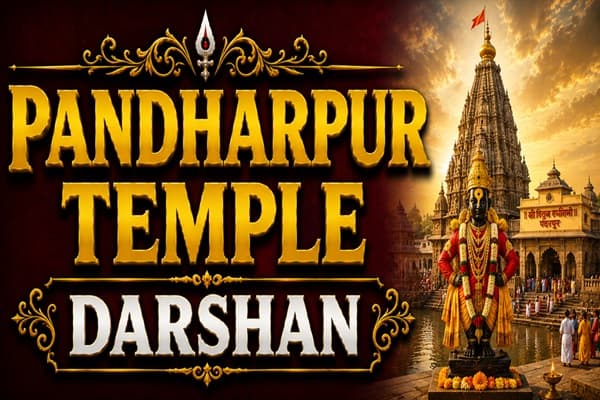
The Chandrabhaga River flows slow and wide past the town of Pandharpur. On its northern bank stands a temple that is not made of stone alone. It is made of devotion. Eight hundred years of it. The Shri Vitthal Rukmini Mandir is the heart of Maharashtra’s spiritual life. The deity here, Lord Vitthal, stands with his hands on his hips, a form unique to this place. He is not seated. He is not reclining. He stands, waiting. Waiting for his devotees. And they come. By the millions. On foot, on buses, on trains. They come singing the abhangas of Sant Tukaram and Sant Dnyaneshwar. They come for the Wari pilgrimage, one of the oldest walking pilgrimages in the world. They come to stand before Vitthal and say, Panduranga Haré.
The temple is not large by modern standards. The sanctum is small. The corridors are narrow. But the energy is immense. On a regular Tuesday, you will wait two or three hours for darshan. On Ekadashi, you will wait six to ten hours. On Ashadhi Ekadashi, the crowd swells to over a million people. The line stretches for kilometers. The town becomes a sea of humanity. That is why the temple trust introduced the darshan pass system. Not to restrict devotees. To protect them. To manage the crowd so that everyone gets a safe, dignified darshan.
Daily Darshan Timings You Must Know
The temple opens at 4:00 AM. The first ritual is Kakad Aarti, the dawn prayer, from 4:15 AM to 4:30 AM. This is the most intimate moment of the day. The temple is dark. The lamps are lit. The priests sing the aarti in a slow, haunting melody. Only a few devotees are present. If you can wake up at 3:30 AM, do not miss this.
Morning darshan runs from 4:30 AM to 1:00 PM. The best slot for a peaceful darshan is between 4:30 AM and 7:00 AM. The crowd is thin. The temperature is cool. The deities look fresh after the morning rituals.
The temple takes an afternoon break from 1:00 PM to 3:00 PM. Do not arrive during these hours. The gates will be closed. The priests will be resting.
Evening darshan runs from 3:00 PM to 11:30 PM. The evening aarti, Dhoop Aarti, is at 6:45 PM. This aarti is more crowded than the morning one. Working people who cannot visit during the day fill the temple at this hour. The final aarti, Shej Aarti, is at 11:30 PM. The temple closes at 11:45 PM.
On Ekadashi days and during the Wari pilgrimage, the timings extend. The temple stays open later. The crowd multiplies. If you plan to visit on these days, expect to wait. Bring patience along with your devotion.
The Darshan Pass System Explained
The darshan pass is not a ticket to the deity. No one can sell you access to God. The pass is a crowd management tool. It gives you a fixed entry time and a designated queue lane. You still wait, but you wait less. You still stand in line, but the line moves faster.
General darshan is completely free. No pass required. You join the general queue and wait your turn. On normal days, the wait is two to three hours. On weekends, three to four hours. On Ekadashi, six to ten hours. The general queue is for devotees who have time, patience, and physical stamina.
Special Darshan costs between 100 and 300 rupees. This pass gives you access to a shorter queue. Your wait drops to one to two hours on normal days. On Ekadashi, the wait is two to three hours. This is the most popular option. It is affordable and effective.
VIP Darshan costs between 1,000 and 2,500 rupees. The price varies by season and demand. This pass gives you priority entry and a much shorter wait. On normal days, you walk in within thirty minutes. On Ekadashi, your wait is one to two hours. This option is best for elderly devotees, families with young children, and pilgrims with limited time.
For Ashadhi Ekadashi, special festival passes are released separately. They cost between 500 and 3,000 rupees. These passes sell out within hours of release. If you plan to visit on Ekadashi, book as soon as the window opens.
How to Book Your Pass Online Step by Step
Online booking is the safest and most reliable method. The official website is vitthalrukminimandir.org. Do not use any other site. There are many fake portals claiming to offer passes. They are scams.
First, open the official website. Click on Darshan Pass Booking. You will see options for General, Special, and VIP passes.
Second, select your visit date and preferred session. Morning sessions from 4:30 AM to 1:00 PM are more popular. Evening sessions from 3:00 PM to 11:30 PM are less crowded.
Third, choose your pass type. If you are healthy and on a budget, Special Darshan is the best value. If you are traveling with elderly family members, choose VIP.
Fourth, enter your full name exactly as it appears on your government ID. Enter your ID number. Aadhaar card works best. Any mismatch between your pass and your physical ID will result in entry denial. No exceptions.
Fifth, complete the payment. The website accepts UPI, debit cards, credit cards, and net banking. Once the payment is successful, you will receive a confirmation email and SMS.
Sixth, download your e pass. Take a screenshot. Save it on your phone. Take a physical printout if possible. Network connectivity in Pandharpur can be poor, especially on festival days. Having an offline copy is essential.
On the day of your visit, report to the designated entry gate for your pass type. VIP pass holders enter through a separate gate. Carry your e pass and original ID proof. Security staff will verify both.
Offline Booking for Those Who Prefer It
If you are not comfortable with online booking, you can purchase passes at counters near the temple. The counters open at 5:00 AM. On normal days, the queue at the counter takes thirty to sixty minutes. On festival days, the queue stretches for hours, and passes often sell out by mid morning.
Offline booking is a backup option, not a primary plan. If you are traveling from far away, if you have a tight schedule, if you are visiting during Ekadashi, book online. The peace of mind is worth the few minutes it takes to register.
Ashadhi Ekadashi 2026: The Grand Festival
Ashadhi Ekadashi falls on 6 July 2026. This is the biggest day at Pandharpur. It is also called Devshayani Ekadashi, the day Lord Vishnu enters his four month cosmic sleep, the Chaturmas. For the Varkari tradition, this is not just a festival. It is the goal of the entire year.
The Wari pilgrimage ends on this day. Devotees from Dehu and Alandi carry the palkhis, the palanquins, of Sant Tukaram and Sant Dnyaneshwar. They walk over 200 kilometers, singing abhangas, stopping at villages along the way. When they finally reach Pandharpur, the entire town erupts. The temple is packed. The streets are filled with saffron clad pilgrims. The sound of jay jay Vitthal never stops.
If you plan to attend Ashadhi Ekadashi, prepare months in advance. Book your pass as soon as the festival window opens, usually thirty to forty five days before the date. Book your accommodation. Book your transport. Do not leave anything to chance.
Kartiki Ekadashi is on 31 October 2026. This is the second largest festival at the temple. The crowd is slightly smaller than Ashadhi Ekadashi, but still massive. The same rules apply. Book early. Plan ahead.
The Wari Pilgrimage: A Moving Meditation
The Wari is not a procession. It is a moving temple. The pilgrims, called Warkaris, walk in groups called dindis. They do not wear shoes. They do not carry modern luggage. They wear saffron clothes and carry a small bag with essentials. They sing the abhangas of the saints. They stop at designated places to rest and eat.
The journey takes weeks. The body aches. The feet crack. But the spirit soars. Warkaris report feeling a lightness, a joy, a sense of purpose that normal life does not provide. By the time they reach Pandharpur, they are not the same people who left home. The pilgrimage has changed them.
If you cannot walk the entire distance, you can still participate. Join a dindi for the last few kilometers. Walk from the outskirts of Pandharpur to the temple. Sing the abhangas. Feel the dust on your feet. It is not the full pilgrimage, but it is a taste. Enough to understand why millions do this every year.
Best Time to Visit for a Peaceful Darshan
October to February offers the most pleasant weather. The summer heat is gone. The winter chill is mild. The crowds are thinner than the Ekadashi months.
Early morning between 4:30 AM and 7:00 AM is the best time for darshan. The temple is calm. The queue is short. The deities look beautiful in the morning light.
Weekdays are less crowded than weekends. Tuesday and Thursday are considered auspicious for Vitthal, so they see a higher crowd than Monday or Wednesday. But even on Tuesday, the morning queue is manageable.
Avoid visiting during the peak summer months of April and May. The heat in Solapur district is brutal. Standing in a queue at 1:00 PM in 42 degree heat is physically dangerous, especially for elderly pilgrims.
How to Reach Pandharpur
By train, Pandharpur Railway Station is connected to Pune, Solapur, and Mumbai. The station is small. On Ekadashi days, it is packed. Trains from Pune take about five hours. From Solapur, about one hour.
By bus, Maharashtra State Road Transport Corporation runs buses from all major cities. Special buses are added during Ekadashi. From Pune, the bus takes about six hours. From Mumbai, about eight hours.
By road, Pandharpur is on National Highway 52. The drive from Pune is about 250 kilometers. From Solapur, 70 kilometers. Parking is available on the outskirts of the town. From there, local transport, tongas, autos, and buses, take you to the temple.
The nearest airport is Solapur Airport, 70 kilometers away. Flights from Mumbai and Hyderabad connect to Solapur. From the airport, hire a taxi.
Also Read : ISKCON Temple Chennai: Darshan Timings 2026, Aarti Schedule, Pooja Details
Where to Stay
The temple trust manages dharamshalas near the temple. Rooms are basic but clean. A bed, a fan, an attached bathroom. Rates are very affordable. Book in advance through the website. On Ekadashi days, rooms are allocated by lottery months in advance.
Private hotels in Pandharpur range from budget options at 500 rupees per night to mid range options at 2,000 rupees per night. During festival seasons, prices double or triple. Book early.
If you cannot find accommodation in Pandharpur, stay in Solapur, 70 kilometers away. The drive takes about an hour. Solapur has better hotels and more reliable booking options. On Ekadashi day, start your drive at 3:00 AM to reach the temple by 4:30 AM.
Dress Code and Rules
The temple expects traditional and modest clothing. Men should wear dhotis or kurtas. Full length trousers with shirts are acceptable. Shorts and sleeveless shirts are not allowed.
Women should wear sarees or salwar suits. Western dresses, sleeveless tops, and short skirts are not permitted.
Mobile phones and cameras are not allowed inside the sanctum. Locker facilities are available near the entrance. Deposit your belongings before joining the queue.
Remove your footwear before entering the temple premises. Shoe stands are available. Do not carry leather items like belts or wallets inside.
Maintain silence inside the temple. Do not push or rush in the queues. The volunteers are there to help. Cooperate with them.
The Deeper Meaning of Vitthal
Vitthal is not a separate deity. He is Krishna, but with a difference. In Pandharpur, he stands on a brick. The story goes that his devotee Pundalik was so busy serving his elderly parents that he did not have time to welcome Krishna. Krishna waited for him, standing on a brick. When Pundalik finally came, he threw the brick for Krishna to stand on. Krishna stood there and never left.
That is the Vitthal of Pandharpur. A god who waits. A god who is patient. A god who does not demand elaborate rituals or expensive offerings. He asks only for devotion. The devotion of a son serving his parents. The devotion of a pilgrim walking hundreds of kilometers. The devotion of a devotee standing in a queue for hours, just for a moment of darshan.
Stand before him. Look into his eyes, wide and painted. He is not looking away. He is looking at you. Waiting. As he has waited for eight hundred years.