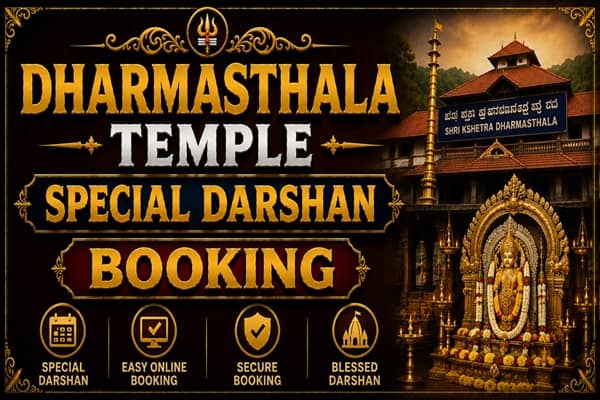
A temple where a Jain family manages the affairs. Vaishnava priests perform the rituals. And the main deity is Lord Shiva. This is not a riddle. This is Dharmasthala Temple, sitting quietly in the Western Ghats of Karnataka. For eight hundred years, this sacred place has shown the world something beautiful. Different faiths do not have to fight. They can come together. They can serve the same divine energy. They can feed the same hungry devotees.
The Godavari River does not flow here. Instead, the Netravati River winds through green hills, carrying the sounds of temple bells to nearby villages. Dharmasthala is not as famous as Tirupati or Shirdi. But the people who come here know a secret. This temple gives you something rare. It gives you peace without complication. Blessings without confusion. And a free meal that tastes better than any restaurant food.
The Unusual Story Behind Dharmasthala
The story begins with a Jain chieftain named Birmanna Pergade. According to legend, the lord of justice, Dharma, appeared in his dream. The lord asked Birmanna to build a temple and dedicate it to Shiva. But Birmanna was a Jain. How could he build a Shiva temple? The lord explained that true devotion has no boundaries. Birmanna followed the instruction. He built the temple, installed the Shiva linga, and named the deity Manjunatha.
That was eight centuries ago. The temple still stands. And the Pergade family, now called the Heggade family, still manages it. Today, Dr D. Veerendra Heggade serves as the Dharmadhikari. Under his leadership, the temple has grown into something much larger than a place of worship. It runs free schools. Free hospitals. Free hostels for poor students. And a free meal program that feeds over ten thousand people every single day.
Stand in the annadana hall at lunchtime. Watch thousands of people sitting in rows, eating the same simple meal from banana leaves. No one asks about your caste. No one checks your income. No one cares which god you pray to. You are hungry. You get food. That is Dharmasthala.
Daily Darshan Timings You Need to Know
The temple follows a consistent schedule every day of the week. No special weekend timings. No complicated changes. Just a simple rhythm that has worked for centuries.
Morning darshan starts at 6:30 AM and continues until 11:00 AM. This is the best time to visit. The crowds are lighter. The temperature is cooler. The priests have just finished the early rituals, and the deity feels fresh and alive. Reach by 6:15 AM if you want to be among the first few people inside.
The temple stays open through the morning for free darshan. But specific rituals happen at fixed times. Shatharudra Abhishekam, a powerful bathing ceremony for the Shiva linga, takes place from 8:30 AM to 10:30 AM. Watching this ritual is worth planning your whole day around. Eleven priests chant the Rudram while pouring water, milk, curd, honey, and ghee over the linga. The sound fills the hall. The energy shifts. You feel it in your chest.
Shiva Sahasranamavali Namarchana happens at 11:00 AM. The priest chants one thousand names of Shiva while offering flowers. Your name can be included in this prayer. Ask at the counter.
Maha Naivedya Samarpana occurs from 11:30 AM to 12:00 PM. This is the food offering. The priests present a full meal to the deity. After the offering, the same food becomes prasadam for devotees.
Afternoon darshan runs from 12:15 PM to 2:30 PM. Then the temple closes completely from 2:30 PM to 5:00 PM. Do not come during these hours expecting entry. Use this time to eat lunch, rest in your room, or walk around the town.
Evening darshan starts at 5:00 PM and goes until 8:30 PM. The atmosphere changes at night. Oil lamps flicker. Chants echo differently off the stone walls. Many devotees say the evening darshan feels more emotional, more intimate.
Maha Pooja happens again at 8:30 PM. Nithyabali, a purification ritual, follows at 8:45 PM. The temple closes its doors at 9:30 PM.
Special Darshan: The 200 Rupee Shortcut
Free darshan is available to everyone. No ticket required. Just join the queue and wait. On normal weekdays, the wait runs about one to two hours. On weekends and holidays, expect two to four hours. During major festivals like Maha Shivaratri, the queue can stretch to five or six hours.
For 200 rupees, you can avoid most of that waiting. This is called Sannidhana Darshan, which means darshan in the presence of the deity. You get a priority queue that moves much faster. On most days, your wait drops to thirty to forty five minutes. Even during festivals, the special darshan queue rarely exceeds one to two hours.
The ticket also includes a small prasadam packet. Nothing fancy. A little food blessed by the deity. But carrying that packet out of the temple feels like taking a piece of the blessing home with you.
Families with young children should absolutely book the special darshan. Standing in a hot, crowded queue for three hours with a crying toddler is nobody’s idea of a pilgrimage. Senior citizens and anyone with mobility issues should also choose the paid option. Your legs will thank you.
How to Book Special Darshan Online
Online booking for Sannidhana Darshan is available through the official temple website. Open your browser and go to shridharmasthala.org. The website looks simple. Do not expect fancy graphics or animations. But the booking system works.
Look for the Darshan Booking or Seva Booking section. Click on it. You will need to create an account first. Enter your name, mobile number, and email address. The system sends a verification code. Enter that code to activate your account.
Log in with your new credentials. Select Sannidhana Darshan from the list of options. Choose your preferred date. The calendar shows you which slots are still available. Morning slots fill up fastest, especially during winter months.
Enter the details of every person in your group. Name, age, and ID proof number. The ticket is linked to these details. If the name on your ID does not match the name on the ticket, you will not be allowed entry.
Complete the payment. The system accepts UPI, debit cards, credit cards, and net banking. Once the payment goes through, you receive an e ticket on your email and mobile phone. Download this ticket. Take a screenshot. Also take a physical printout if possible.
Reach the temple at least thirty minutes before your booked time. Find the Sannidhana Darshan queue. Show your ID and ticket to the security staff. They will verify your details and let you in.
One important point. Even with an online ticket, you still need to visit the token counter near the entrance. The staff there converts your e ticket into a physical token. Some visitors miss this step and get confused at the sanctum entrance. Do not be that person.
The Anna Dana Free Meal
Dharmasthala feeds everyone who walks through its doors. No questions asked. No payment required. This tradition is called Anna Dana, the gift of food. The temple kitchen prepares thousands of meals every single day. On festival days, that number climbs to fifty thousand or more.
The meal is served on a banana leaf. White rice, sambar, rasam, vegetable curry, curd, and a sweet payasam. The food is vegetarian, simple, and delicious. Udupi cuisine originated in this region, and the temple kitchen follows those ancient recipes. The sambar has a unique taste. The payasam feels like a hug.
Lunch is served from 12:15 PM to 2:30 PM. Dinner runs from 7:00 PM to 9:00 PM. Join the line. Take a leaf. Sit on the floor with strangers who become family by the end of the meal. Eat with your hands. That is how the food tastes best.
Many pilgrims say the Anna Dana experience stays with them longer than the darshan itself. Watching a thousand people eat together in silence, sharing the same simple food, breaks down every wall you have built around yourself.
How to Reach Dharmasthala
Mangalore is the gateway to Dharmasthala. The city sits about seventy five kilometers from the temple. Mangalore International Airport receives flights from Mumbai, Delhi, Bangalore, Chennai, and several Gulf cities. From the airport, pre paid taxis charge around 1,800 to 2,200 rupees for the two and a half hour drive to the temple. KSRTC buses also run from Mangalore to Dharmasthala at a much lower cost.
Mangalore Central Railway Station is also about seventy five kilometers away. Express trains connect Mangalore to Bangalore, Mumbai, Chennai, and other major cities. From the station, buses and taxis are readily available.
If you prefer to drive, Dharmasthala sits on NH75. The road passes through coffee estates, areca nut plantations, and patches of dense forest. The drive is beautiful, especially during or just after the monsoon when everything is green.
From Bangalore, the distance is about three hundred forty kilometers. The drive takes six to seven hours. KSRTC runs luxury and sleeper buses on this route. Book your bus ticket in advance, especially on weekends.
Also Read : Bhadrachalam Temple Timings 2026: Darshan, Sevas, Online Booking
Where to Stay Near the Temple
The temple trust manages several dharamshalas and guest houses near the complex. These are the most convenient options because you can walk to the temple in five to ten minutes. The rooms are basic but clean. A bed, a fan, an attached bathroom, and running water. No luxury. Just honest accommodation for tired pilgrims.
The dharamshalas operate on a first come, first served basis. No advance booking. Arrive early in the day to secure a room. Check in starts at 12:00 PM. Check out before 10:00 AM.
Paid guest houses like the SDM Guest House and Annapurna Guest House cost between 800 to 2,000 rupees per night. These rooms are more comfortable and include breakfast. Online booking is available for these properties through the temple website.
Private hotels in Ujire, which is eight kilometers away, and Belthangady, fourteen kilometers away, offer more options. Budget rooms start at 600 rupees. Mid range hotels charge 1,000 to 2,500 rupees. During festivals, book everything weeks or even months in advance.
Dress Code and Rules
Men must wear a dhoti, pyjama, or full length pants with a shirt. Shorts and sleeveless shirts are not allowed. Women must wear a saree or salwar kameez with a dupatta. Western dresses, jeans, and t shirts are prohibited.
Do not test these rules. The security staff at the entrance turns people away every single day. Changing rooms are available near the entrance, but they are small and often crowded. Save yourself the hassle. Dress appropriately before leaving your hotel.
Leather items are not allowed inside the temple. This includes belts, wallets, bags, and shoes. Free locker facilities are available near the entrance. Deposit your leather items and mobile phones before entering.
Photography is prohibited inside the sanctum. You can take pictures in the outer premises. Respect the signs and the instructions of the staff.
Festivals That Fill the Temple
Maha Shivaratri is the biggest festival at Dharmasthala. Thousands of devotees stay awake all night, performing special poojas and chanting Shiva’s names. The temple stays open through the night. Special darshan queues still move, but the waiting time increases dramatically. Book your tickets months in advance if you plan to visit during Shivaratri.
The Dharmasthala Rathotsava, the chariot festival, happens in March or April. The temple deity is brought out onto a massive, beautifully decorated chariot. Devotees pull the chariot through the streets while singing and dancing. The energy is electric. The crowds are massive.
Navaratri, the nine night festival dedicated to the divine mother, brings special decorations and rituals. The temple stays busy through all nine nights. Evening aartis feel extra powerful during this period.
Contact Information
Keep these details handy for your trip. The temple helpline responds to queries about darshan timings, seva bookings, accommodation, and festival schedules.
Address: Shree Kshetra Dharmasthala, Dakshina Kannada, Karnataka 574216
Helpline: 08256 266666
Office Phone: 08256 266655
Email: info@shridharmasthala.org
Office hours are 9:30 AM to 2:00 PM and 4:00 PM to 9:00 PM. Call during these times for the fastest response. The staff speaks Kannada, English, and Hindi.
The Deeper Lesson of Dharmasthala
Many temples focus on one tradition, one deity, one way of worship. Dharmasthala breaks that pattern. A Jain family manages a Shiva temple where Vaishnava priests perform the rituals. Eight hundred years of this arrangement working smoothly. No fights. No controversy. Just devotion.
Walking through the temple gates, you feel something unusual. The heavy hand of dogma is absent. The priests do not care about your background. The administrators do not ask about your faith. The free meal counter does not check your papers. You come hungry, you eat. You come seeking, you find.
Dharmasthala proves that spiritual unity is not a dream. It is a daily practice. It is a Jain family serving Shiva. It is Vaishnava priests chanting in a Shaivite temple. It is ten thousand strangers eating the same meal from the same leaves.
The Netravati River flows past the temple steps. The Western Ghats rise green and silent in the distance. And somewhere inside that stone sanctum, Lord Manjunatha sits, accepting the prayers of all who come, regardless of the path they took to reach him.