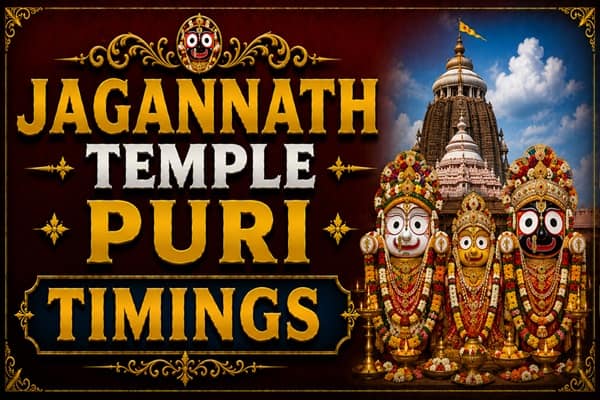
The Bay of Bengal crashes against the shores of Puri, and just a few hundred meters from the sea, a temple rises like a mountain. This is not a quiet temple where you sit in silence. This is a living temple where the deities breathe, eat, sleep, and take vacations. The wooden idols of Lord Jagannath, Lord Balabhadra, and Goddess Subhadra rule over a kingdom that never sleeps. Every day, from 5:00 AM to 11:00 PM, the temple pulses with rituals that have not changed for centuries. Miss the timing, and you will stand outside locked gates. Plan well, and you will witness something no other temple can offer.
Built in the 12th century by King Anantavarman Chodaganga Deva, this temple is one of the four Char Dham pilgrimage sites. But numbers and dates do not capture what makes this place special. Unlike stone or metal idols that remain unchanged forever, the deities here are made from sacred neem wood. Every few years, they are ceremonially replaced through a secret ritual called Navakalevara. The old idols are buried. The new ones are carved in complete secrecy. Even the priests do not know which tree will be chosen until the last moment.
Daily Darshan Timings That Actually Make Sense
Let me clear up the confusion that sends most first time visitors into a panic. The temple does not stay open continuously from 5:00 AM to 11:00 PM. Darshan opens, closes, reopens, and closes again throughout the day. Each closure is for a specific ritual. Each reopening is for a specific darshan window. Knowing these windows is the difference between a peaceful visit and a frustrating wait.
Morning darshan starts at 5:00 AM with the Dwaraphita ceremony, the opening of the doors. Mangala Aarti follows immediately, waking the deities with lamps and chants. This early morning slot, from 5:00 AM to 6:00 AM, is the most peaceful. The temple is dark except for the oil lamps. The priests voices echo off the stone walls. Only the most dedicated devotees wake up this early.
From 6:00 AM to 7:00 AM, the priests perform Mailam, removing the night attire of the deities, and Abakash, the sacred bath. You can watch this from a distance. The bathing ritual is mesmerizing. The priests pour water, sandalwood paste, and herbs over the wooden idols while chanting mantras.
Sahanamela Darshan happens from 7:00 AM to 8:00 AM. This is the first proper public darshan window. The deities are dressed in fresh clothes. The lights are bright. The crowd is moderate but manageable. Many regular devotees say this is the best time to visit.
Then comes the first closure. From 8:00 AM to 9:00 AM, the temple prepares for Gopala Ballava Puja. Darshan is closed. Do not arrive at 8:30 AM expecting entry. You will stand outside.
Sakala Dhupa, the morning bhog offering, happens from 10:00 AM to 11:00 AM. Darshan is open during this time, but the queue moves slowly because priests are busy offering food to the deities.
Madhyanha Dhupa, the midday bhog, runs from 11:00 AM to 1:00 PM. Darshan is open, but this is the hottest part of the day. The crowd is thinner because many tourists do not know the temple remains open. This is actually a good time for a calm darshan.
Then comes the afternoon closure. Madhyanha Pahuda, the rest time for the deities, runs from 1:00 PM to 1:30 PM. The curtain is drawn. The priests leave the inner sanctum. The deities are put to sleep. Darshan is completely closed. Many visitors show up at 1:00 PM, see the closed gates, and leave, thinking the temple is closed for the day. That is a mistake. Wait until 2:00 PM. The temple reopens.
Afternoon darshan continues until 5:30 PM, when Sandhya Aarti begins. During Sandhya Aarti, which runs from 5:30 PM to 6:30 PM, darshan is restricted. You can watch the aarti from a distance, but you cannot go near the deities.
Sandhya Dhupa, the evening bhog, runs from 7:00 PM to 8:00 PM. Darshan is open again. This is the most popular evening slot. Working people who cannot visit during the day fill the temple at this hour.
Then comes the most beautiful darshan window of the day. Badashringara Vesha runs from 9:30 PM to 10:30 PM. The deities are dressed in their night attire, decorated with flowers and jewels, and presented to devotees one last time. The temple is quieter now. The crowd is smaller. The lamps are dim. Standing before Lord Jagannath at this hour, watching him prepare for sleep, feels like an intimate family moment.
Finally, Khata Seja Lagi, the night rest ritual, happens around 12:00 AM. The temple closes shortly after. Do not arrive at 11:00 PM expecting darshan. Security will not let you in.
Darshan Ticket Prices and VIP Options
General darshan at Jagannath Temple is completely free. No ticket required. No online booking needed. Simply walk in during the open darshan windows and join the queue. On normal weekdays, the wait ranges from thirty minutes to one hour. On weekends and festival days, the wait stretches to two or three hours.
For devotees who want a faster experience, Special Darshan is available at 100 rupees per person. This ticket gives you access to a separate queue that moves faster. On most days, your wait drops to thirty minutes. On busy days, expect forty five minutes. Still much better than the free queue.
VIP Darshan costs 500 rupees per person and offers priority entry with minimal waiting. This option is particularly suitable for elderly devotees, families with young children, and pilgrims with limited time. VIP tickets can be booked online through the official temple website or purchased at the temple counter. Availability is limited, especially during festival seasons.
Children below a certain age do not need tickets. They can accompany their parents for free. Carry a valid ID proof for verification. The name on the ticket must match the name on your ID.
Mahaprasad: The Sacred Kitchen That Never Stops
The kitchen at Jagannath Temple is the largest temple kitchen in the world. Seven hundred cooks work in shifts. Two hundred and fifty earthen pots are stacked one on top of another. The fire is lit with wood, never gas or electricity. No one tastes the food during cooking. The first bite always goes to Lord Jagannath.
This food is called Mahaprasad. It is not just temple food. It is considered so sacred that even the leftovers are worshipped. Devotees believe that eating Mahaprasad removes sins and brings blessings. The meal is simple but filling. Rice, dal, vegetable curry, a sweet dish, and a fried item. All vegetarian. All cooked with devotion.
You can buy Mahaprasad at Anand Bazaar, located inside the temple complex. The prices are very low. A full meal costs between 20 to 50 rupees. Do not leave the temple without eating here. Sitting on the floor, sharing a meal with strangers who become family by the end of the meal, is an experience that stays with you long after you return home.
The main bhog window is between 12:00 PM and 2:00 PM. Arrive during this time to get the freshest Mahaprasad. Evening bhog is also available between 7:00 PM and 8:00 PM, but the variety is smaller.
Dress Code That Is Not a Suggestion
Jagannath Temple enforces a strict dress code. This is not a recommendation. This is a requirement. Men must wear dhotis with kurtas or angavastrams. Formal trousers and shirts are also acceptable, but dhoti is preferred. Shorts, jeans, and cargo pants are strictly prohibited.
Women must wear sarees or salwar kameez with dupatta. Long skirts with tops are acceptable if they cover the shoulders and knees. Sleeveless tops, short dresses, and tight jeans will get you turned away at the gate.
Do not argue with the security staff. They are following orders. Changing rooms are not available near the entrance. Dress appropriately before leaving your hotel. This may feel strict, but eight hundred years of tradition do not change for tourists.
Leather items are not allowed inside the temple. This includes belts, wallets, and bags. Mobile phones and cameras are also prohibited. Free locker facilities are available near the entrance. Use them.
Major Festivals That Transform the Temple
Rath Yatra is the biggest festival at Puri, and one of the largest religious gatherings in the world. Millions of devotees pull the massive wooden chariots of Lord Jagannath, Lord Balabhadra, and Goddess Subhadra through the streets of Puri. The chariots are rebuilt every year. The ropes are pulled by devotees from all over the world. The energy is chaotic but electric.
During Rath Yatra, the temple is closed for regular darshan. The deities are taken out of the temple and placed on the chariots. They travel to the Gundicha Temple, about three kilometers away. They stay there for nine days. Then they return. If your dates align with Rath Yatra, do not expect normal darshan. But witnessing the chariot procession is an experience that makes skipping temple darshan worth it.
Snana Yatra happens in May or June. The deities are brought out of the temple and bathed publicly with one hundred eight pots of water. After this ritual, the deities fall sick, according to tradition. They are kept in isolation for fifteen days. The temple is closed to the public during this period. Do not plan a visit during Snana Yatra unless you want to see the temple gates locked.
Navakalevara is the rarest festival. It happens every eight to twelve years, when the lunar calendar dictates. The wooden idols are ceremonially replaced. The old idols are buried in the temple grounds. The new ones are carved from sacred neem trees. The entire ritual happens in complete secrecy. Only a few priests know the location of the trees. Thousands of devotees attend the Navakalevara year. If you hear that Navakalevara is happening, book your travel months in advance.
Also Read : Tiruchanur Padmavathi Darshan 2026: Online Booking, Timings, Sevas, Tickets
How to Reach Jagannath Temple
Puri Railway Station is the nearest major railhead. Express trains from Kolkata, Bhubaneswar, Delhi, Chennai, and Mumbai stop here. From the station, auto rickshaws charge around 50 to 80 rupees for the three kilometer ride to the temple. Cycle rickshaws are cheaper but slower. The ride takes fifteen to twenty minutes.
Bhubaneswar is the nearest airport, about sixty kilometers away. Flights from all major Indian cities connect to Bhubaneswar. From the airport, pre paid taxis charge around 1500 to 2000 rupees for the ninety minute drive to Puri. APSRTC buses also run from Bhubaneswar to Puri at much lower cost. The bus drops you at the Puri bus stand, about two kilometers from the temple.
By road, Puri is well connected to Bhubaneswar, Cuttack, and Kolkata. The highway from Bhubaneswar to Puri is smooth and well maintained. If you are driving from Kolkata, the distance is about five hundred kilometers. The drive takes ten to eleven hours. Consider breaking the journey at Bhubaneswar if you are driving from far away.
Once you reach Puri, the temple is in the center of the town. You cannot miss it. The spire rises above every other building. Follow the crowd. You will reach the entrance.
Where to Stay Near the Temple
The temple administration manages several guest houses and dharmashalas within walking distance of the temple. These are the most convenient options because you can walk to the temple in five to ten minutes. The rooms are basic but clean. A bed, a fan, an attached bathroom, and running water. No luxury. Just honest accommodation for tired pilgrims.
Booking for these guest houses is available online through stayatpurijagannatha.in. Prices start from 300 rupees per night and go up to 2000 rupees for cottages. Book well in advance, especially during Rath Yatra and other festival seasons. Same day rooms are rarely available.
Private hotels in Puri range from budget options at 500 rupees per night to luxury resorts at 5000 rupees per night. The area near the temple has many hotels. Read reviews before booking. Some hotels are clean and honest. Others are not. Ask your taxi driver for recommendations, but verify with online reviews.
The Flag That Defies the Wind
Look up at the top of the temple spire. You will see a flag. It is not a special flag. It is just a piece of cloth. But here is the mystery. The flag always flies in the opposite direction of the wind. When the wind blows from the sea towards the land, the flag blows towards the sea. When the wind changes direction, the flag changes with it. No one has explained this convincingly.
Similarly, the temple dome casts no shadow. At noon, when every other building casts a dark shadow, the Jagannath Temple dome leaves no mark on the ground. Scientists have studied this. They have no answer. Devotees do not need an answer. They accept it as divine mystery. You can accept it too, or you can spend hours trying to debunk it. Either way, the flag still blows the wrong way.
Birds and aircraft do not fly over the temple. Locals will tell you this. Check for yourself. Stand in the courtyard and look up. The sky is empty. Birds circle around the temple, but never directly above. Planes change their flight paths. The temple administration does not have radar equipment. Something else keeps the sky clear.
The Deeper Lesson of Puri
Jagannath Temple does not reward hurry. It rewards patience. You cannot walk in at 2:00 PM and demand darshan. The deities are resting. You cannot show up in jeans and expect entry. The tradition is eight hundred years old. You cannot attend Rath Yatra and complain about crowds. Millions of people came before you. Millions will come after.
This temple teaches surrender. Not to a priest. Not to a system. To time itself. The sun rises. The rituals begin. The sun sets. The deities sleep. And tomorrow, the same sequence repeats. No urgency. No shortcuts. Just devotion that has outlasted empires, invasions, and modernization.
Standing in the courtyard, watching the flag blow the wrong way, eating Mahaprasad from a banana leaf, you realize something. You are not in control here. The temple is. Lord Jagannath is. And for once, letting go of control feels like freedom.
The Bay of Bengal will keep crashing against the shores. The kitchen will keep cooking. The priests will keep chanting. And you will leave Puri with something you did not come with. A slower heartbeat. A quieter mind. A reminder that some things are not meant to be understood. They are meant to be experienced.