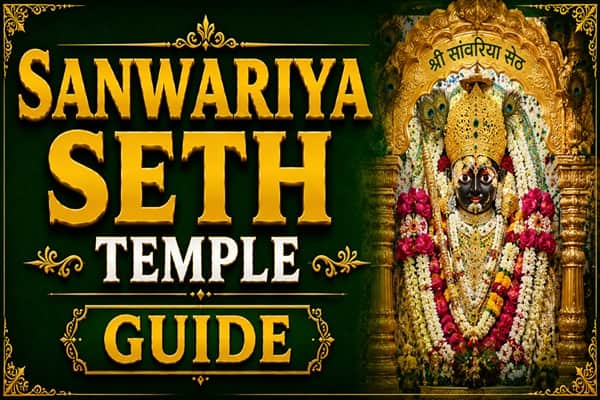
A milkman in 1840 had a dream. Not a vague, forgettable one. A dream so clear, so insistent, that he could not ignore it. Lord Krishna appeared to Bholaram Gurjar and told him about three black stone idols buried in the earth at Chapar village. The villagers dug. They found exactly what the dream had promised. Three dark, beautiful, self-manifested idols of Krishna. One of them now sits in Mandaphia village, in the Chittorgarh district of Rajasthan. And that idol has a name. Sanwariya Seth. The dark skinned merchant. The businessman’s God.
This temple is not like other Krishna temples. Here, the lord is not just worshipped. He is treated as a partner. A silent investor in every business venture. Merchants from Gujarat, Rajasthan, Madhya Pradesh, Maharashtra, and Delhi come here not just to pray, but to report. They lay their profit and loss statements before him. They offer a share of their earnings as gratitude. And when they leave, they feel that their business is now protected by the highest power in the universe.
Daily Darshan and Aarti Timings You Need to Know
The temple wakes up early. Doors open at 5:00 AM. The first light of the sun touches the white marble spire, and the priests begin the Mangala Aarti at 5:30 AM. This is the most peaceful time in the temple. The crowd is thin. The air is cool. The chants are fresh and powerful.
Morning darshan runs from 5:30 AM to 12:00 PM. If you want a calm, unhurried darshan, come before 8:00 AM. The later morning hours get busier as more people arrive from nearby towns.
The temple takes a break from 12:00 PM to 2:30 PM. This is the bhog break, the lord’s rest time. The sanctum is closed. The priests stop all rituals. Do not arrive during these hours expecting entry. Use this break to eat lunch at one of the small restaurants outside the temple or rest in your car.
Evening darshan begins at 2:30 PM and continues until 8:00 PM. The evening crowd is larger because people from nearby cities drive down after work. The Shayan Aarti, the final aarti of the day, happens at 8:00 PM. The temple closes by 8:30 PM.
On special days like Ekadashi, Janmashtami, and Kartik Purnima, the timings extend. The temple stays open later. The crowd multiplies. If you visit on these days, expect to wait.
The Aartis That Move the Heart
The aarti schedule at Sanwariya Seth Temple follows the rhythm of a traditional Krishna temple. Each aarti marks a moment in the lord’s day.
Mangala Aarti at 5:30 AM is the awakening. The priests draw the curtain. The lamps are lit. The conch is blown. Watching this in the dark, with only the oil lamps flickering, is a spiritual experience that stays with you.
Shringar Darshan starts at 6:00 AM. The lord is dressed and decorated. The idol, carved from black stone, is covered in clothes, jewels, and flowers. The contrast of the dark stone against the bright ornaments is striking.
Rajbhog Aarti happens from 10:00 AM to 11:15 AM. This is the midday food offering. Business owners consider this the most important aarti. They believe that prayers made during Rajbhog Aarti bring prosperity and stability. The temple is crowded at this hour, but the energy is focused and intense.
Evening Aarti is at 7:30 PM. The lamps are lit. The chants fill the hall. The darkness outside makes the lights inside seem warmer. Devotees who work during the day fill the temple at this hour.
After the evening aarti, from 9:15 PM onwards, the temple holds bhajan and kirtan sessions. The singers sit in the courtyard. The devotees sit on the floor. The music is not performance. It is prayer. It continues until the temple closes around 11:00 PM.
The Business Partner Tradition That Makes This Temple Unique
Walk into any other temple in India, and you will see people making wishes. They light a lamp. They tie a thread. They offer a coconut. And then they wait. At Sanwariya Seth, the relationship is different. Here, the devotee does not just ask. They partner.
The tradition is simple. A businessman makes a heartfelt request to Sanwariya Seth. He promises to return and offer a percentage of his earnings if the wish is fulfilled. When the profits come, he returns. Not with a coconut. With a cheque. A donation. A share of his success, given back to the lord.
This is not a one time thing. Many merchants do this every month. Every time they make a profit, they send a portion to the temple. The donation box, opened at the end of each month, regularly contains seventeen to nineteen crores. The temple trust uses this money to run guest houses, feed pilgrims, and fund community welfare programs.
Why do businessmen trust Sanwariya Seth so deeply? Because the stories are real. Generations of Marwari and Gujarati trading families have passed down accounts of fortunes made, debts cleared, and businesses saved after praying here. The deity is not just a god. He is a silent partner. A divine accountant who does not ask for equity. Only faith.
The Miracle of 1840 and the Three Idols
Bholaram Gurjar was a simple milkman. He had no ambition to build a temple. He had no resources to excavate land. But the dream would not leave him. He told the villagers. They dug at Chapar village. And they found three stunning black stone idols, perfectly carved, shimmering even in the dim light.
The three idols were established at three different locations. The main idol, the one that now draws lakhs of devotees, was installed at Mandaphia. The second idol went to Bhadsoda village. The third remained at Chapar, the original discovery site.
Devotees who want the full blessing visit all three temples in a single day. The circuit is short. The villages are close. A morning spent traveling between Mandaphia, Bhadsoda, and Chapar completes a pilgrimage that few casual visitors know about.
The name Sanwariya comes from the dark complexion of the idol. Krishna is often called Sanwariya, the dark one. Seth means merchant or wealthy businessman. The combined name captures the essence of this deity. A dark, wealthy lord who protects the wealth of his devotees.
Festivals That Fill the Town with Devotion
Janmashtami is the biggest celebration. The temple stays open all night. The idol is decorated with new clothes and gold ornaments. Devotees sing bhajans without stopping. The energy is electric. The crowd is massive. If you plan to visit on Janmashtami, book your accommodation at least two months in advance.
Jaljhulani Ekadashi is a three day fair that has been held every year since 1961. The lord is placed on a beautifully decorated swing. Priests swing him gently while devotees sing. The fair falls on Dashami, Ekadashi, and Dwadashi of the Bhadrapada Shukla Paksha. Thousands of vendors, pilgrims, and devotees fill the entire region.
Holi is celebrated with colors and bhajans. The playful spirit of Krishna is on full display. Devotees throw colored powder, but the atmosphere remains devotional, not wild.
Annakoot, celebrated after Diwali, involves offering a mountain of food to the lord. The kitchen prepares hundreds of dishes. The food is stacked high in front of the deity. After the offering, the same food is distributed as prasad.
Kartik Purnima brings holy bathing and special poojas. Devotees believe that any spiritual act performed on this day multiplies in merit.
How to Reach the Temple
The temple sits on National Highway 27, in Mandaphia village, Chittorgarh district, Rajasthan. The location is easy to find. The white marble spire is visible from the highway.
By road, from Chittorgarh city, the temple is 33 to 40 kilometers away. The drive takes about one hour. From Udaipur, the distance is 80 to 110 kilometers. Drive time is two to two and a half hours. From Jaipur, it is 330 kilometers, about five and a half hours.
State buses run regularly on all these routes. Private taxis are available for hire. If you are driving yourself, the highway is in good condition. Parking at the temple is available but limited on festival days.
By train, the nearest railway station is Chittorgarh Junction, 33 to 41 kilometers away. Trains connect Chittorgarh to Delhi, Mumbai, Jaipur, Kota, and Kolkata. From the station, prepaid taxis and local buses can take you to Mandaphia.
By air, the nearest airport is Maharana Pratap Airport in Udaipur, about 100 kilometers away. Daily flights connect Udaipur to Mumbai, Delhi, Bengaluru, and Chennai. From the airport, pre book a taxi for the two hour drive.
Where to Stay
The temple trust runs its own guest houses for pilgrims. These are the best options because they are clean, affordable, and located within walking distance of the temple.
Shri Sanwaliya Dham Guest House in Bhadsoda offers AC rooms, hot water, CCTV security, and parking. Shri Sanwaliya Dham AC Guest House has 47 rooms and 4 suites, a banquet hall, and free parking. Budget dharamshalas are also available for those who need only basic amenities.
Hotels in Chittorgarh city offer mid range options with better facilities. Staying in Chittorgarh is a good choice if you plan to visit the fort and other attractions.
Book your accommodation well in advance during festival seasons. Janmashtami and Jaljhulani Ekadashi fill every room within a twenty kilometer radius. Same day rooms are almost never available.
Dress Code and Rules
The dress code at Sanwariya Seth Temple is traditional and modest. Men should wear dhoti kurta or a simple kurta with modest trousers. Shorts, sleeveless shirts, and western casual wear are not allowed.
Women should wear saree, salwar kameez, or any modest traditional attire. Shoulders and knees must be covered. Western dresses and sleeveless tops are not permitted.
Remove your footwear before entering the temple premises. Shoe storage counters are available near the entrance. Leather items, including belts and wallets, are not allowed inside the sanctum.
Mobile phones must be switched off or kept on silent inside the temple. Do not take calls. Do not check messages. The temple is a space for prayer, not for notifications.
Photography is restricted inside the sanctum. You can take pictures of the exterior, the courtyard, and the temple spire. Do not try to sneak photos of the deity. The priests will stop you, and other devotees will be offended.
The Architecture That Draws the Eye
The temple follows the traditional Rajasthani style. White marble and stone dominate the complex. The spire, the shikhar, rises above the temple and is visible from the highway. It guides devotees to the entrance like a beacon.
The inner sanctum, the garbhagriha, houses the black stone idol of Sanwariya Seth. The idol is not large. But the eyes are. Large, dark, and penetrating. They seem to follow you as you move.
The mandapa, the pillared hall, is spacious. The pillars are carved with traditional motifs. The ceiling is painted with scenes from Krishna’s life. The floor is cool marble.
The complex has expanded significantly from the simple four walled structure built in the 1840s. The temple trust has added guest houses, a banquet hall, shops, and administrative offices. Despite the expansion, the sanctum has remained unchanged. The lord still sits where he was first installed nearly two hundred years ago.
Also Read : Bangalore Jagannath Temple: Timings, Festivals, Mahaprasad & Complete Guide
The Three Temple Circuit
Most visitors come only to Mandaphia. They have darshan. They offer prasad. They leave. But the true pilgrimage, the complete circuit, includes all three temples.
Start at Mandaphia. Have darshan of the main idol. Then drive to Bhadsoda, about fifteen minutes away. The temple here is smaller, quieter. The second idol sits peacefully, receiving fewer visitors but equal devotion.
Then go to Chapar village, the original discovery site. The third idol is here, in a modest temple that feels closer to the earth. Standing in Chapar, you can imagine Bholaram Gurjar’s dream. You can feel the weight of the miracle.
The circuit takes about half a day. Do it in the morning. Start at Mandaphia at 6:00 AM. Reach Bhadsoda by 7:00 AM. Reach Chapar by 8:00 AM. Return to Mandaphia by 9:00 AM for the Rajbhog Aarti. The day will be long. The blessings will be multiplied.
Why This Temple Changes People
Money is a difficult subject in spirituality. Many traditions caution against attachment to wealth. Sanwariya Seth Temple takes a different approach. It does not ask you to renounce wealth. It asks you to share it. To treat every profit as a blessing. To remember that your success is not entirely your own.
When you stand before that dark stone idol and promise to give back a portion of your earnings, something shifts. You stop hoarding. You start sharing. You realize that money is not a thing to be possessed. It is a current to be channeled.
The businessmen who come here are not renouncing the world. They are engaging with it differently. With gratitude. With humility. With the understanding that the real merchant is not the one who counts the coins, but the one who knows where the coins come from.
Sanwariya Seth does not offer a shortcut to wealth. He offers a partnership. Invest your effort. He will invest his blessing. Share your profit. He will share his protection. That is not magic. That is faith. And at this temple, faith works.