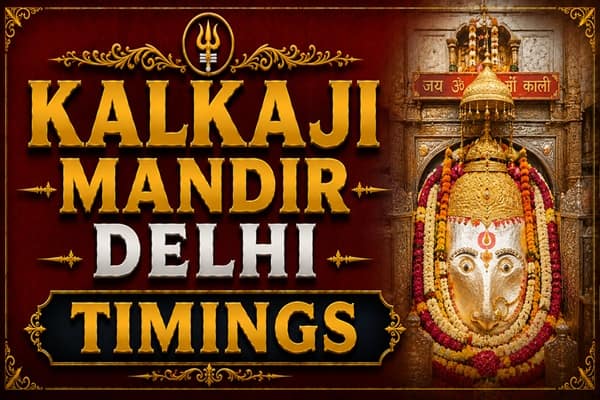
A white marble temple sits quietly in South Delhi, surrounded by the chaos of Nehru Place traffic and metro crowds. But step inside the gates, and the noise fades. The air changes. The mind settles. This is Kalkaji Mandir, one of the oldest and most powerful Shaktipeeth temples in North India. For thousands of years, devotees have walked through these entrances with one common goal. They want to stand before Maa Kalka, the fierce form of Goddess Durma, and pour out their hearts.
The temple is officially called the Jayanti Peetha or Manokamna Siddha Peetha. Those names mean something specific. Manokamna means desire. Siddha means fulfillment. Peetha means sacred seat. Put together, this is a place where wishes come true. Not because of magic. Because of faith that has been concentrated here for over three thousand years. Layer after layer of devotion has soaked into the marble floors, the stone walls, the very air that you breathe when you enter.
History whispers through every corner. The Mahabharata mentions this site. Lord Krishna and the Pandavas are believed to have worshipped here during their exile. The temple that stands today was built around 1764 AD by the Marathas. Later, Mirza Raja Kidar Nath, a treasurer in Emperor Akbar Shah II’s court, contributed to its expansion. But the original energy predates all of them. Locals say the goddess herself appeared here, choosing this spot as her earthly residence.
Daily Darshan Timings You Cannot Miss
The temple opens its doors at 4:00 AM. Not 5:00. Not 6:00. Four in the morning, when Delhi is still asleep. This early hour is the best kept secret among regular devotees. The crowd is thin. The temperature is cool. The goddess feels freshly awakened, receptive to the first prayers of the day.
Morning darshan continues from 4:00 AM until 12:00 PM. But note the small breaks. The temple closes briefly from 11:30 AM to 12:00 PM for the Bhog Aarti. Then again from 3:00 PM to 4:00 PM for cleaning and maintenance. Do not come during these short windows expecting entry. You will stand outside locked gates.
Evening darshan runs from 4:00 PM to 11:30 PM. The temple stays open late, much later than most Delhi temples. This accommodates working professionals who cannot visit during the day. The night crowd has its own energy. Families come after dinner. Young couples sit on the steps, talking in low voices. Elderly devotees lean against the pillars, eyes closed, lips moving in silent prayer.
On regular days, darshan takes about thirty minutes. On weekends, expect one to two hours. During Navratri, the queue stretches for hours. That is when the VIP pass becomes not a luxury but a necessity.
Aarti Schedule That Touches the Soul
Four aartis mark the rhythm of the day at Kalkaji Mandir. Each one offers a different experience.
Mangala Aarti happens at 4:30 AM. The temple is dark except for the oil lamps. The priests chant in voices that have not changed in centuries. This is the most intimate aarti. Only the most dedicated devotees wake up this early. If you want to feel the goddess without a thousand people pushing behind you, come for Mangala Aarti.
Bhog Aarti takes place at 12:00 PM. The midday sun streams through the arched entrances. The priests offer food to the deity. Later, that same food becomes prasad for devotees. The Bhog Aarti is shorter than the others, but the simplicity is its strength.
Sandhya Aarti at 7:00 PM draws the largest crowd. The temple fills with working people who have just finished their day. The lamps are lit. The bells ring continuously. The chants rise and fall like waves. By the end, the entire hall vibrates with energy. Many first time visitors say this aarti brought tears to their eyes without any warning.
Shayan Aarti at 10:30 PM is the final ritual. The priests prepare the goddess for sleep. The atmosphere becomes tender, almost sad. Watching this aarti feels like saying goodnight to your own mother. The temple closes shortly after, at 11:30 PM.
VIP Darshan Pass: Your Shortcut to the Goddess
During Navratri and other major festivals, the lines at Kalkaji Mandir become legendary. People wait for four, five, even six hours. Families with young children struggle. Elderly devotees faint in the heat. The temple administration recognized this problem and introduced the VIP Darshan Pass.
The pass costs between 150 to 300 rupees per person. That is a small price to pay for saving three to four hours of standing in a hot, crowded queue. The VIP queue moves faster. You get a separate entry point. The security staff guides you through. On normal days, the VIP pass is not necessary. The regular queue moves quickly enough.
But during Navratri, the VIP pass becomes essential. The temple sells these passes only at on site counters. Online booking is not available. Do not fall for third party websites claiming to sell Kalkaji Mandir VIP passes online. They are scams. Show up at the temple, go to the official counter, and buy your pass directly.
Groups of ten or more can request a group pass at 80 rupees per person. This requires coordination. Call the temple office in advance. They will guide you through the process. The group pass is particularly useful for office teams, family reunions, or pilgrimage groups coming from out of town.
Best Time to Visit for a Peaceful Darshan
Early morning between 4:00 AM and 7:00 AM is the golden window. The metro has not started running yet. The streets are empty. The temple feels like a private sanctuary. You can stand in front of the deity for as long as you want. The priests are unhurried. The security staff is relaxed. This is how temples felt a hundred years ago, before crowds and queues became part of the experience.
Late evening after 8:00 PM offers another peaceful slot. The initial evening rush has cleared. Families have gone home to dinner. The night crowd is smaller, more meditative. The temple looks beautiful after dark, lit up with strings of lights. The white marble glows against the black sky.
Avoid Sundays, Tuesdays, and public holidays unless you enjoy crowds. Tuesday holds special significance for Maa Kali devotees. The temple fills with people who fast on Tuesdays. The energy is powerful but the queues are long. If you must visit on a Tuesday, come at 4:00 AM or after 9:00 PM.
The best months to visit are October through March. Delhi summers are brutal. Standing in a queue at 2:00 PM in June is not just uncomfortable. It can be dangerous, especially for elderly devotees or those with health conditions. Winter mornings are crisp and pleasant. The walk from the metro station to the temple feels good, not exhausting.
How to Reach Kalkaji Mandir
The Kalkaji Mandir Metro Station on the Violet Line is your best friend. Exit the station and walk for two minutes. That is it. You cannot get lost. The temple is visible from the station exit. Follow the crowd if you are unsure.
The metro runs from 6:00 AM to 11:00 PM. First train and last train timings vary slightly by line. Check the Delhi Metro app before planning your return journey. The station has elevators and escalators, making it accessible for wheelchair users and elderly devotees.
If you prefer to drive, the temple has a parking area. But here is the warning. Parking fills up quickly, especially on weekends and during festivals. On Navratri days, finding a spot within a one kilometer radius becomes a challenge. Consider taking the metro instead. It saves time, money, and frustration.
From Hazrat Nizamuddin Railway Station, the distance is about 7 kilometers. An auto rickshaw charges 80 to 100 rupees. The ride takes twenty to twenty five minutes, depending on traffic. From New Delhi Railway Station, take the metro. Board the Yellow Line, change to Violet Line at Central Secretariat, and get off at Kalkaji Mandir station.
From Indira Gandhi International Airport, the distance is about 20 kilometers. The metro is the most reliable option. Take the Airport Express Line to New Delhi station. Change to the Yellow Line towards HUDA City Centre. Change again at Central Secretariat to the Violet Line. The entire journey takes about fifty minutes. A taxi from the airport charges 400 to 600 rupees, depending on traffic.
Dress Code and Temple Etiquette
The temple does not have a strict dress code posted at the entrance. But tradition and respect demand modesty. Men should wear full pants or kurtas. Shorts are not appropriate. Women should wear sarees, salwar suits, or long skirts with dupatta. Sleeveless tops and revealing clothes attract stares and disapproval.
Remove your shoes before entering the main temple premises. A shoe counter near the entrance charges a small fee, usually 5 to 10 rupees. If you want to save money, carry a plastic bag and keep your shoes with you. But bags are not allowed inside the sanctum. You will need to store them anyway.
Leather items are not allowed inside the temple. This includes belts, wallets, and handbags. The security staff will ask you to remove them. Use the locker facility near the entrance. It is free but limited. On crowded days, the lockers fill up quickly.
Photography is not allowed inside the main sanctum. You can take pictures of the exterior, the courtyard, the arches, and the decorations. But once you step into the inner area where the deity sits, put your phone away. The priests will call you out. Other devotees will glare at you. Do not be that person.
Silence your phone before entering. Do not take calls inside the temple. Do not play videos or music. This is a place of prayer, not a waiting room. Respect the devotees around you who have come to focus, not to listen to your ringtone.
Who is Maa Kalka and Why She Matters
Maa Kalka is not the gentle, motherly form of Durga that you see in calendar art. She is fierce. Her dark complexion represents the void from which all creation emerges. Her tongue sticks out, dripping with blood. She wears a garland of skulls, each one representing an ego that she has destroyed.
This is not a goddess for the faint hearted. You do not approach Maa Kalka with casual prayers. You come to her when you are desperate. When enemies surround you. When injustice feels unbearable. When you need protection that no human can provide.
Legend says that the demon Raktabeej could not be killed because each drop of his blood that fell on the ground created another demon. The gods were helpless. Then Maa Kali appeared from Durga’s forehead. She drank Raktabeej’s blood before it could touch the ground. She destroyed him completely. That is the power that resides in Kalkaji Mandir.
Devotees believe that the goddess fulfills wishes here faster than at any other temple. That is why the temple is called Manokamna Siddha Peetha. People come with specific requests. A job promotion. A child’s recovery from illness. A legal battle ending in their favor. They leave flowers, coconuts, and sometimes gold as thanks when their prayers are answered.
The Architecture That Holds the Energy
The temple is built entirely of white marble, brick, and plaster. A pyramid shaped tower rises above the structure. Inside, the central chamber has twelve sides, each side measuring twenty four feet. Each side has its own entrance, all of which open into a marble gallery.
The gallery is eight feet nine inches wide. It ends in three arched doorways on each side, totaling thirty six exterior arches. Stand in the center and look around. The symmetry is perfect. The marble feels cool under your bare feet. The arches frame the sky in geometric patterns.
At the heart of the temple, a marble pedestal holds the carved stone idol of Maa Kali. Her name is engraved in Hindi on the pedestal. A stone trident stands before her, symbolizing her power. On both sides, tiger statues made of red sandstone represent strength and courage. Red velvet drapes add warmth to the white marble interiors.
The temple complex includes smaller shrines dedicated to Lord Hanuman and Lord Shiva. Take a moment to visit them after your darshan. The Hanuman temple sits on the left. The Shiva temple on the right. Both have their own energy, their own regular devotees. Sitting in the Hanuman temple for five minutes, watching the priest perform archana, feels grounding after the intensity of Maa Kalka’s presence.
Festivals That Transform the Temple
Navratri is the main event. Not once, but twice a year. Chaitra Navratri falls in March or April. Sharad Navratri falls in September or October. During these nine day periods, the temple stays open for extended hours. Overnight jagrans keep the goddess awake, with continuous bhajans and devotional songs.
The temple fills beyond capacity. The queue for darshan stretches outside the gates, down the street, around the corner. VIP passes sell out by 8:00 AM. The energy is chaotic but electric. Thousands of voices chanting Jai Maa Kalka at the same time. The sound hits you like a wave. If you can handle crowds, come during Navratri. If you cannot, come any other time.
Durga Puja, especially popular among Bengali devotees, brings its own flavor. The temple makes special arrangements. The aartis are longer. The decorations are more elaborate. The prasad includes traditional Bengali sweets.
During Diwali, the temple is lit up with thousands of oil lamps. The white marble shimmers. The evening aarti on Diwali night feels extra special. Families come dressed in new clothes. Children run around with sparklers. The goddess smiles down on all of it.
Nearby Attractions Worth Your Time
The Lotus Temple is just one kilometer away. You can walk from Kalkaji Mandir to the Lotus Temple in fifteen minutes. The contrast between the two temples is striking. One is ancient, dark, fierce. The other is modern, bright, peaceful. Visit both in one day. Your soul will appreciate the balance.
Nehru Place, the IT hub of Delhi, sits nearby. If you need to buy electronics or computer parts, this is the place. Thousands of shops selling everything from laptop chargers to full server setups. Not exactly spiritual, but practical if you are visiting from out of town.
ISKCON Temple in East of Kailash is about six kilometers away. The energy there is completely different. Gentle chanting. Beautiful deities. A vegetarian restaurant that serves excellent food. Many devotees combine visits to both temples in a single trip.
India Gate, Connaught Place, and the National Museum are all within a thirty minute drive. If you are visiting Delhi specifically for Kalkaji Mandir, consider staying a few extra days to explore the city. The metro makes travel easy and affordable.
Also Read : Tadbund Hanuman Temple Vehicle Pooja Timings 2026: Darshan, Aarti, Fees
Where to Stay and What to Eat
The temple trust runs dharamshalas for out of town devotees. The rooms are basic but clean. A bed, a fan, an attached bathroom. No luxury, just honest accommodation. Rates are very affordable. But rooms are allocated on a first come, first served basis. No advance booking. Arrive early in the day to secure a spot.
Several budget hotels operate near Kalkaji Mandir. Hotel Sai Prakash, Hotel Aditya, and similar properties charge between 800 to 1500 rupees per night. These are comfortable enough for short stays. Mid range options like Treebo Trend hotels cost 2000 to 3000 rupees. Premium hotels in nearby Nehru Place and Saket charge upwards of 5000 rupees.
The area around the temple is filled with food options. Street vendors sell chaat, samosas, gol gappe, and chole bhature. Small restaurants serve thalis, dosas, and north Indian curries. Many of them are vegetarian, which suits the temple’s atmosphere.
The temple itself offers prasad. On special days, free meals are distributed. The food is simple but made with devotion. Sitting on the floor, eating from a banana leaf, surrounded by hundreds of other devotees, is an experience that stays with you.
The Deeper Meaning of Coming Here
You can read all the timings. You can book your VIP pass. You can plan your metro route. But none of that prepares you for the moment you first see Maa Kalka. The idol is not large. The sanctum is not grand. Yet something shifts inside you. A weight you did not know you were carrying suddenly feels lighter.
Maybe it is the faith of millions before you. Maybe it is the goddess herself. Maybe it is simply the act of slowing down, of standing in line, of waiting for your turn while chanting her name. Whatever it is, it works.
People come to Kalkaji Mandir with specific requests. They leave with something larger. A sense that they are not alone. That the divine feminine is watching. That no matter how dark things get, there is a power in this universe that protects, that destroys evil, that listens to the prayers of ordinary people.
The metro will take you home. The crowd will disperse. The lights will go out in the temple until 4:00 AM the next morning. But something will remain. A seed of faith planted by Maa Kalka herself. Water it with regular prayer. Watch it grow into something that no queue, no VIP pass, no amount of money can buy.